Pandora Report 1.18.15

For those who’ve been reading for awhile, you’ve probably surmised that one of my personal health interests is seasonal and pandemic flu. There were plenty of stories about that this week, so that’s what we’ll focus on. We’ll also look at Ebola and other stories you may have missed. My apologies for posting delays this week, I’m dealing with some rotator cuff and carpal tunnel issues in my right arm, and let me tell you, it is HARD to type with your dominant arm in a sling!

Enjoy your holiday Monday (if you have one) and have a safe and healthy week!

Texas Health Experts Say Universal Flu Vaccine Could be a Reality

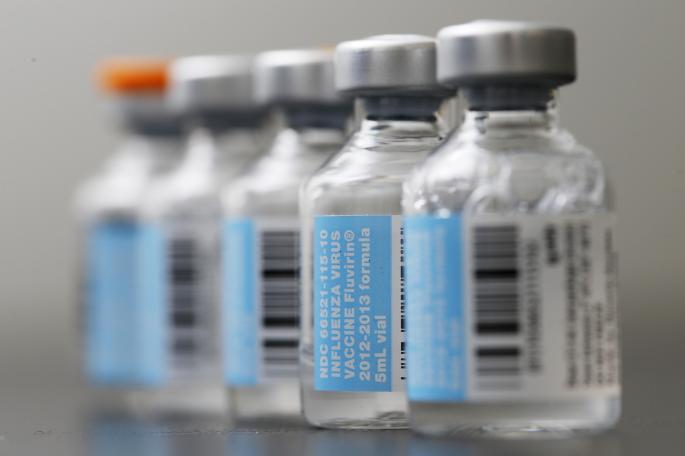
The CDC has said that this year’s seasonal flu vaccine was only 23% effective due to unanticipated antigenic drift—meaning the predicted strains in the vaccine didn’t match the dominant strains of the virus that are currently circulating. In order to combat this in the future, scientists at Mount Sinai health system in New York are in the process of testing a universal flu vaccine which will go into clinical trials this year.

KLTV.com—“‘There is work going on to see if, perhaps a different kind of vaccine could be developed maybe against a different part of the flu virus, one that is not so subject to this antigenic drift or to change as readily from one year to the next,” [Dr. Levin of UT Health Northeast] says.”

Scientists Find Brain Protein Aids Influenza Recovery

Scientists at Washington State University in Spokane have found a brain protein that boosts the healing power of sleep and speeds recovery from the flu in mice. Professor James M. Kruger said this discovery could lead to alternative treatments for flu and other infectious diseases by stimulating production of the brain protein called AcPb. This discovery comes at a time where avian influenza is prevalent in Taiwan, Japan, Nigeria, China, Egypt, Canada, the U.S. and Mexico.

Washington State University—“Krueger showed this recovery involves AcPb and an immune system signaling chemical called interleukin-1. AcPb links up with interleukin-1 to help regulate sleep in healthy animals. It also prompts infected animals to spend more time sleeping during an illness.

In the study, mice who lacked the gene for AcPb slept less after being infected with influenza virus. They also became chilled, grew sluggish, lost their normal circadian rhythms and ultimately died in higher numbers than the mice who slept longer.”

This Week in Ebola

As GMU students return to classes, so do students in Ebola affected Guinea. Schools in Guinea will re-open Monday, and schools in Liberia are set to re-open “next month.” No date has been set for schools in Sierra Leone. Despite this, the President of Sierra Leone has declared that there will be zero new confirmed Ebola cases by the end of March the country will be Ebola-free, by WHO standards, by May. These announcements come at a time when Dr. Thomas Frieden, Director of the CDC, has said he was “very confident we can get to zero cases in this epidemic if we continue the way we’re going and nothing unexpected happens” and the outbreak appears to be slowing down. Last week brought record low numbers—for Guinea, the lowest total since mid-August; for Liberia, the lowest total since the first week of June; for Sierra Leone the second week of declines and the lowest level since the end of August. However, there are still “at least 50 micro-outbreaks” underway throughout West Africa.

Pauline Cafferkey, the Scottish nurse infected with Ebola, is “showing signs of improvement” and an American soldier who was found dead in Texas after his deployment in West Africa reportedly showed no signs of Ebola leaving officials to remark that there was “no evidence of a public health threat.”

A seemingly large amount of good news this week left space for new ruminations on Ebola and outbreaks in general. Wired  had an interesting piece on Nanobiophysics and how it could stop future global pandemics while The Chicago Tribune looked at bats and their likely role in Ebola outbreaks and CNBC looked at the price of protection from global pandemics—would you believe $343.7 billion?

Stories You May Have Missed


Image Credit: NBC News

Pandora Report 9.13.14

This week we look at a report that claims DHS is not prepared for a pandemic and information about Chemical Weapons in Syria, still. We also have an Ebola update, and if you’re interested in learning more about the West African outbreak, join us Wednesday for our September Biodefense Policy Seminar!

Have a great weekend!

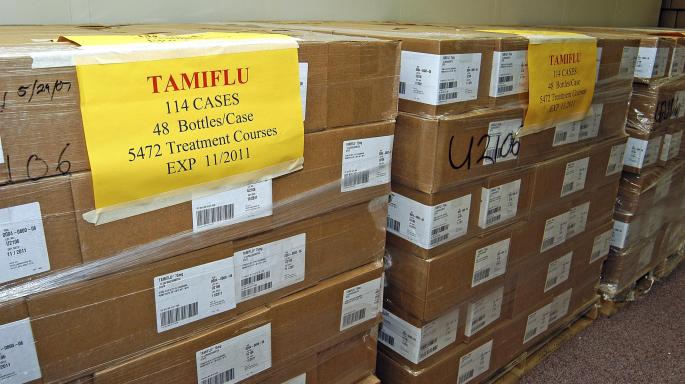
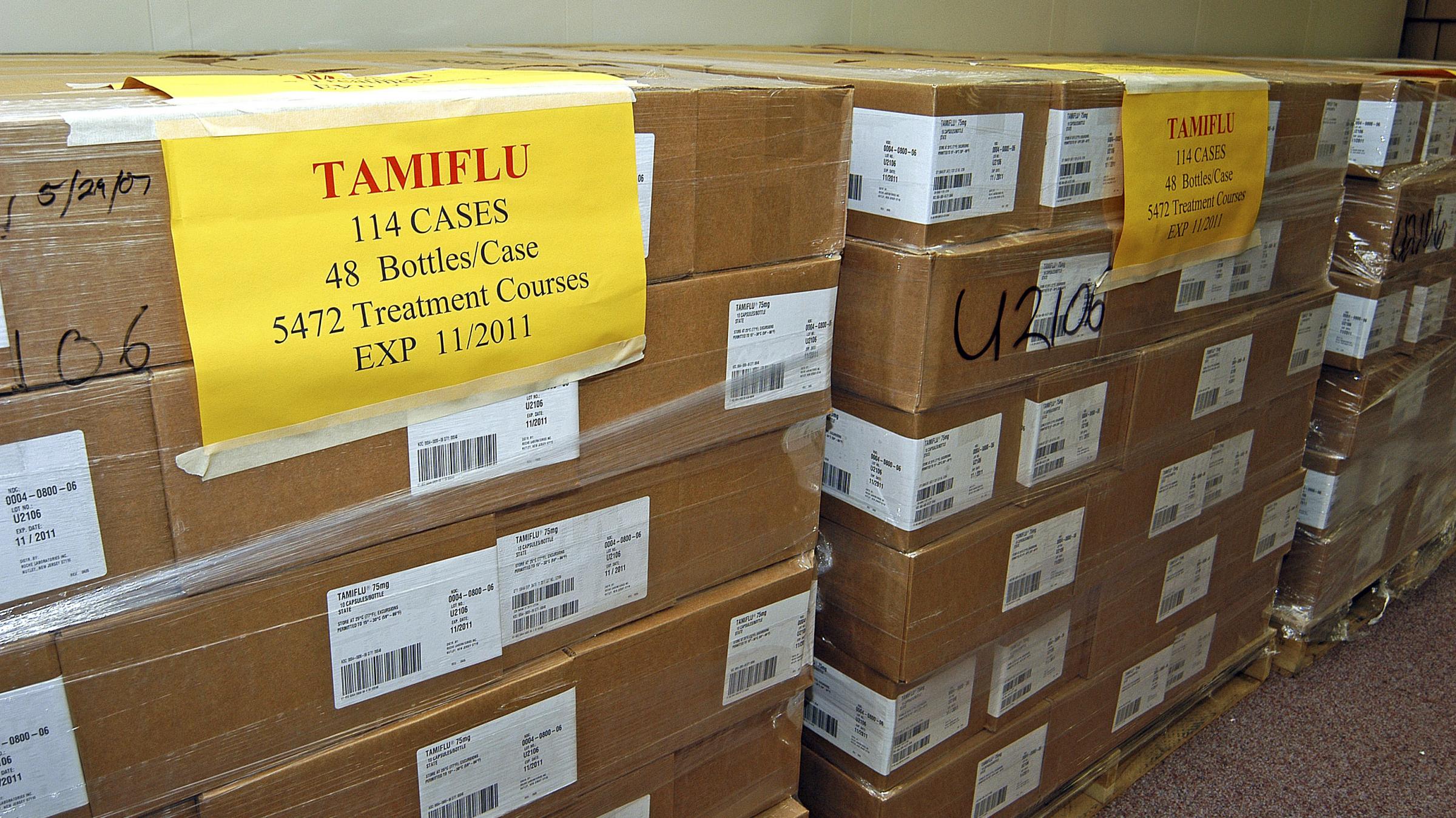
Homeland ill-prepared for Pandemic, Doesn’t Even Have Enough Drugs to Protect Secret Service

In a recently released report, the Office of the Inspector General claims that “the Department of Homeland Security may not be able to provide sufficient pandemic preparedness supplies to its employees to continue operations during a pandemic.” DHS, however, has disagreed with much of the report claiming it misrepresents the agency’s preparedness for an outbreak.

The Washington Times—“One of the biggest problems, investigators said, is that most of the stockpiles are of antiviral drugs that are expiring. By the end of 2015, the IG said that 81 percent of Homeland Security’s stockpiled antiviral medication will be past its shelf life. In addition, 84 percent of the agency’s stock of hand sanitizer has already expired, some batches by as long as four years, inspectors said.”

Watchdog Says Chlorine Gas Used as a Chemical Weapon in Syria

The Organization for the Prohibition of Chemical Weapons reports that chlorine gas was used “systematically and repeatedly” as a weapon in northern Syria earlier this year. U.S. officials say that the Assad regime is the only force capable of launching such an attack. Even after the destruction of Syria’s chemical weapons stockpiles, chlorine is not a forbidden substance under the CWC. However, the use of any chemical as a weapon is prohibited by the CWC. This news comes among concerns that any hidden weapons stockpiles may fall into the hands of terrorist or extremist groups, like ISIS

The Wall Street Journal—“The OPCW team traveled to the sites of attacks and interviewed victims, doctors and witnesses. According to the report, victims’ symptoms and the effect of the gas led the mission ‘to conclude with a high degree of confidence that chlorine, either pure or in mixture, is the toxic chemical in question.’”

This Week in Ebola

Another American Ebola patient was sent to Emory University in Atlanta for treatment and American Ebola survivor Dr. Kent Brantly donated blood to the American patient, Dr. Rick Sacra, who is being treated in Nebraska. The thought is that Dr. Brantly’s blood will help confer passive immunity to Dr. Sacra. On last Sunday’s Meet the Press, President Obama pledged U.S. military assistance in setting up isolation units and providing security for health workers in West Africa but House Republicans indicated they would provide less than half of the White House’s requested funding for fighting Ebola. The Bill and Melinda Gates Foundations has pledged to contribute $50 million to support emergency efforts to contain the outbreak in West Africa. There were reports this week of a U.S. air marshal who was injected with a syringe at the Lagos Airport in Nigeria. Though it appears that the syringe was not infected with Ebola, it has caused fears that Ebola could be used as a weapon. All of this comes at a time when disease modelers at Northeastern University predict that as many as 10,000 cases of Ebola could be detected by the end of the month and there have been 60 cases resulting in 35 deaths from the Ebola outbreak in Congo.

Image Credit: WGBH News

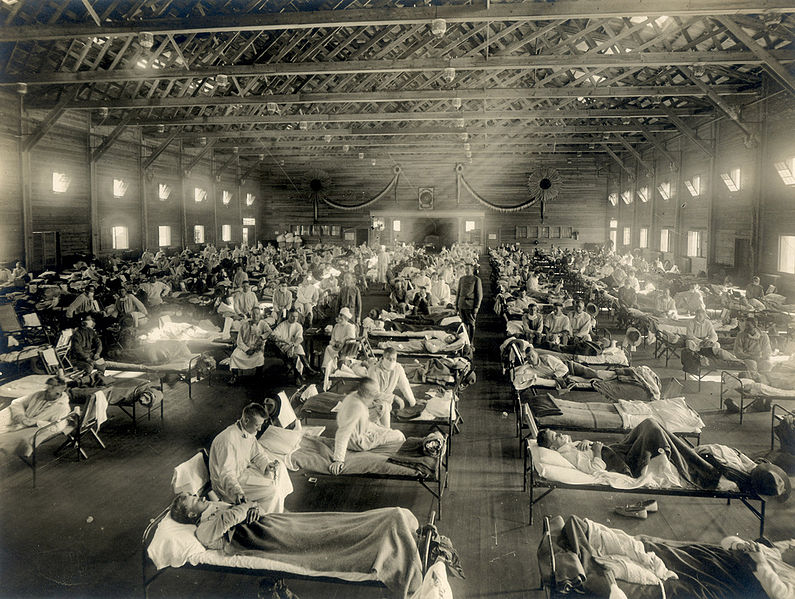
Image of the Day: Camp Funston

Camp Funston


This photo depicts an influenza ward at Camp Funston in Kansas during the 1918 Influenza Pandemic. This flu outbreak occurred between 1918 and 1920 and was one of the most deadly in history, infecting approximately 500 million people and killing 3-5% of the world population (50-100 million.)

That’s killed 3-5% of the entire world–not just infected 3-5% of the world!

Many historical resources cover this worldwise pandemic, also known as “Spanish Flu”, its effects, it causes, and the lasting legacy. Two include flu.gov and John M. Barry’s The Great Influenza.


Bubonic Plague: An Airborne Toxic Event

by Alena M. James

Yersinia pestisis a gram negative, bacillus shaped bacteria that prefers to reside in an environment lacking oxygen (anaerobic). It is typically an organism that uses the process of fermentation to break down complex organic molecules to metabolize.  However, the organism is commonly referred to as being a facultative anaerobe, because it can live in the presence of oxygen and undergo respiration to generate energy for its cell. Its facultative capability is one reasons the organism can induce infection in highly oxygenated lung tissue.

This organism, primarily a zoonotic pathogen, has been held responsible for causing the bubonic form of plague responsible for the Black Death, the 14th century event that lead to the death of millions of Europeans. For years, the cause of the Black Death Plague pandemic has been linked to fleas. In much of Europe at this time, unsanitary living conditions provided the perfect breeding grounds for flea infested rats to flourish; while the fleas served as the perfect arthropod vector for Y. pestis to flourish.

The route of transmission of Y.pestis, from fleas to humans, was thought to occur via the urban cycle—when an urban rat becomes infected with fleas from a wild animal. Crowding in cities, poor hygiene, and unsanitary living conditions attracts large rat populations to the area. When a flea carrying Y.pestis bites a rat, the rat becomes sick and dies. No longer able to parasitize the rat, the flea moves from the rat to a new host. In crowded cities, the fleas from the dead rat will jump to humans to feed. When the flea bites the human it releases Y. pestis into the human’s cardiovascular system. Once in the cardiovascular system, the bacterial organism makes its way to the lymph nodes.  There it replicates and spreads throughout the body causing septicemia. As Y. pestis proliferates within the lymph nodes it also forms hemorrhagic necrosis throughout the body.  Painful swelling arises and the definitive painful symptom, the bubo,appears.  After infection, a patient develops a high fever and the organism can target specific organs of the body like the lungs, liver, and spleen. Without treatment, a patient has a 75% mortality rate.


Last week, British scientists performed comparative DNA analysis on bacterial samples collected from 25 excavated skeletons found in the Clerkenwell area of London. These remains dating back to the 14th century contained samples of Yersinia pestis, the bacteria responsible for the Black Death. In an attempt to evaluate the virulent nature of the pathogen, the Y. pestis DNA collected from these remains were compared to DNA from the Y. pestis responsible for the deaths of more than 30 people in Madagascar back in December 2013. Researchers concluded that the DNA of both organisms revealed a high percentage of similarity and that the pathogenic nature of the 14th century Y. pestis is no more powerful than the Y.pestsis responsible for the Madagascar killings.

After considering this information and examining the plausible death of the skeletons, scientists believe that the fast-acting killing capabilities of Y.pestis are only likely to take place through airborne transmission. This conclusion undermines the urban cycle transmission method and suggests that the Black Death was mostly caused by pneumonic plague and not bubonic. British scientists are determined to examine more modern cases to confirm this new hypothesis. If confirmed, we may see pneumonic plague identified as the causative agent for the 14th century plague pandemic thus altering our historical account of the Black Death.

For British scientists, the transmission of Y. pestsis through respiratory droplets is a much more likely scenario for achieving rapid kills versus the urban cycle transmission method. Bubonic plague is not infectious and there is no human to human transmission from the buboes that form.  However, pneumonic plague can be caused by bubonic plague if the Y. pestis pathogen makes its way via the lymph nodes to the lungs inducing infection. While in the lungs, the organisms are caught in respiratory droplets and are then disseminated into the air when an infected person sneezes or coughs. This quickly makes the host very infectious and a threat to those not yet infected.  The mortality rate for patients suffering from pneumonic plaque without treatment is 100%.


Image Credit: crossrail.co.uk

H2N2 as a Potential Pandemic Threat

According to a new study published in the Journal of Virology, descendants of the H2N2 strain of avian influenza, last seen in humans in the 1950s, may still pose a significant threat to humans, particularly those under 50 years of age. According to the study, conducted by  St. Jude’s Children’s Research Hospital, the virus is still highly adapted to human respiratory cells. The last major outbreak occurred in 1957-58, and killed up to two million people globally. However, effective antivirals were absent at the time – should the virus, which has subsequently circulated in birds, re-emerge, it should be susceptible to modern antivirals. However, as the virus has not been seen in humans in over 50 years, anyone under the age of approximately 55 years would constitute a naive host, and as there are 230 million people in the US alone currently under the ages of 55, the size of this naive population is not insignificant. 

From Science Daily – “‘While these viruses genetically look very avian, this study shows they can behave like mammalian viruses and replicate in multiple mammalian models of flu,’ said the study’s first author, Jeremy Jones, Ph.D., a postdoctoral fellow in Webster’s laboratory. ‘That is troubling because some of the original H2N2 pandemic viruses looked avian when the pandemic began in 1957, but in a few short months, all of the isolated viruses had picked up the genetic signatures of adaptation to humans. Our results suggest the same could happen if the H2N2 viruses again crossed from birds into humans.’ Work is underway at St. Jude to identify other changes that are critical to the ability of avian flu viruses to infect and replicate in mammalian cells, Jones said.”

Read more here

(image via wikimedia commons)

The Pandora Report 10.4.13

Highlights include our shutdown soapbox, more rumors of Syrian BW, the WHO’s pandemic influenza preparedness plans, Boston’s BSL-4 lab, and a real-life zombie apocalypse. Happy Friday!

CDC Director: ‘Microbes Didn’t Shut Down’

As we wrap up our first week of the shutdown, we thought we’d take a second to assess the damage. Many critical biomedical experiments are hemorrhaging money. Health and Human Services has furloughed 52% of its employees. DHS has furloughed over 31,000 employees. The number that concerns us most, however, involves the CDC. We tweeted earlier this week that the CDC has had to furlough 8, 754 people, or 68% of its staff. This means that flu season is starting, and no one is watching. If we’re hit with a novel strain, a mutated strain, a particularly virulent strain,  we’d have no idea. This giant blind-spot isn’t limited to the US – CDC employees are some of the world’s top epidemiologists, often helping with investigations at outbreak hotspots globally. What are we currently very worried about in the Middle East? MERS. Hajj is around the corner, which means an influx of millions of people from around the world to the virus’ epicenter. Is it inconceivable that a pilgrim travels from New York to Mecca, picks up the virus and brings it back? Absolutely not. What’s inconceivable is that because of the shutdown, we might not know.

Wall Street Journal – “The CDC won’t be able to conduct routine inspections of high security labs around the nation that work with ‘select agent’ pathogens that pose severe threats to human and animal health such as Marburg virus or hemorrhagic fevers, said spokeswoman Barbara Reynolds. Most of the CDC’s own lab work has been stopped. The agency is not conducting surveillance for flu outbreaks. Only one CDC staffer is tracking reports of dangerous foodborne pathogens rather than the usual six staff – not a lot given that 48 million Americans develop foodborne illnesses every year.”

The World Hasn’t Tackled Syria’s Real WMD Nightmare

Foreign Policy has a piece out discussing Syria’s alleged biological weapons program. “Forget the nerve gas,” the byline states, “It’s Assad’s bioweapons program that should keep you up at night.” We disagree. For the many, clearly elucidated reasons why, please see Dr. Ben Ouagrham-Gormley’s excellent piece, “On Not Falling Prey to Biological Weapons Alarmism in Syria” here.

Foreign Policy – “A recent U.N. report on chemical weapons use in Syria has strengthened claims that the regime killed more than a thousand innocent Syrians, including hundreds of children, with the nerve agent sarin. Video images after the Aug. 21 attacks showed victims frothing at the mouth, convulsing, and suffering tortured deaths. But the effects of a chemical attack, horrible as they are, can be minuscule compared with a worst-case assault with a biological weapon.”

WHO Group To Discuss Plan For Industry Use Of Pandemic Flu Viruses

A group of WHO experts is meeting next week to work on a plan, Pandemic Influenza Preparedness, for companies to pay for use of flu virus strains in development of patented treatments.  The meetings will include members of a special WHO Advisory Group, as well as key industry stakeholders. The funds gathered would then be used primarily for pandemic preparendess (70%), with the remaining funds used for global response efforts.

Intellectual Property Watch – “The focus of the three-day meeting will be to discuss the draft implementation plan for the use of Partnership Contribution funds through the end of 2016, a WHO source said. WHO is aiming for final completion of the process by year’s end. The second day of the meeting will be dedicated to consultations with industry and other stakeholders, the source said. Other issues to be discussed include the status of SMTA-2 negotiations (Standard Material Transfer Agreement), and ‘technical matters’ in the PIP Framework, the source said.”

Federal judge OKs Boston U disease research lab

Boston University’s proposed BSL-4 lab has cleared another hurdle to construction, with a federal judge dismissing the case against the lab’s construction. Residents of Boston’s South End have obstructed the lab’s construction for years, citing fears of exposure to pathogens like Ebola. While we can sympathize with any and all fears of Ebola exposure, in this case we think the judge was right. The research conducted in BSL-4 labs are critical to helping us detect, prevent, and treat some of the world’s most dangerous pathogens.

Seattle PI – “A Boston University laboratory built to study some of the world’s most dangerous diseases is one step closer to opening following a federal judge’s decision issued this week that it poses little risk to the public…The lab now only needs a final review from the Boston Public Health Commission. Some portions of the 192,000-square foot building have already opened to study less dangerous germs. The court’s decision “affirms our view that this type of research can be done safely in Boston,” BU spokesman Steve Burgay told The Boston Globe.”

Our Puff Piece of the Week: Scientists Discuss The Reality Of A Zombie Apocalypse

RedOrbit reached out to a bunch of microbiologists and asked them to imagine what a “real” zombie virus might look like. We approve.

In case you missed it:

Dr. Paul Walker, October Biodefense Seminar Speaker, Wins Prestigious Rights Livelihood Award
– Chemical Weapons Team Arrive in Syria: Blair on Why the End in Not Nigh
DTRA’s New, Highly Sensitive Bio-agent Detector
– Using an Army of Fish to Fight Dengue

(image: Rich Renomeron/Flickr)

Using AI to Predict a Pandemic

Researchers are using “machine learning”, a process by which computers use compiled data to develop algorithms, to try and determine distinctive characteristics of viruses with pandemic potential, like H7N9. It’s hoped that being able to identify these properties will help alert virologists when new strains emerge containing them. Machine learning enables researchers to cross-reference tremendous amounts of data – “hundreds of thousands of flu strains” – to look for similar markers of pathogenicity.

Wired – “‘It’s changing the field radically,’ said Nir Ben-Tal, a computational biologist at Tel Aviv University in Israel. Researchers are also using these approaches to investigate a broad range of viral mysteries, including what makes some viruses more harmful than others and the factors that influence a virus’s ability to trigger an immune response. The latter could ultimately aid the development of flu vaccines. A study published in July analyzed differences in the human immune system’s response to flu, identifying for the first time genetic variants that seem to influence an individual’s ability to fight off H1N1. Machine learning techniques might even accelerate future efforts to identify the animal source of mystery viruses.”

Read more here.

(image: Axs Deny/Flickr)

The Pandora Report 8.16.13

Highlights this week: MERS in India, Ebola!, new swine flu, a universal flu vaccine?, and not mad cow. Happy Friday!

Middle Eastern Respiratory Syndrome (MERS) Reaches India

With a population of over 1.2 bilion people, India has understandably been on high alert for Middle Eastern Respiratory Virus. Last week a 40-year-old man who had just returned from Saudi Arabia became the country’s first case. The patient spent three day in his home in Vashi, a small town less than two hours south of Mumbai, before being admitted into the local hospital. No word yet on whether he has a family or close relatives living with him, but no new cases have been detected.

Times of India – “In the first suspected case of the Middle East Respiratory Syndrome Coronavirus (MERS-CoV) in the city, a Vashi resident has been quarantined at Kasturba Hospital in Chinchpokli. The 40-year-old man was admitted to the hospital’s ward 30, meant for infectious diseases, on Wednesday afternoon with complaints of fever and a progressing pneumonia (inflammation of lungs). The patient had returned to India on August 12 after spending 35 days in Saudi Arabia.”

Scientists Reveal How Deadly Ebola Virus Assembles

Just when you thought you knew Ebola, its proteins go and change shape on you. Scientists have discovered that the molecule responsible for the virus’ release of virions (VP40) is capable of changing shape to perform new functions.  This is a big deal, as up until now, proteins were generally believed to only be possible of forming one shape – one shape, one function. Researchers will be able to use this surprising piece of information to build antivirals tailored specifically to the VP40’s different shapes, enabling them to selectively target different points in the virus’ assembly. Which would be nice, because Ebola is scary.

Science Daily – “The results, five years in the making, revealed the Ebola VP40 protein exists as a dimer, not as a monomer as previously thought, and it rearranges its structure to assemble filaments to build the virus shell or “matrix” to release countless new viruses from infected cells. The study showed the protein also rearranges itself into rings in order to bind RNA and control the internal components of the virus copied inside infected cells. This “shape-shifting” or “transformer” behavior explains how the Ebola virus can control a multi-step viral lifecycle using only a very limited number of genes.”

New swine flu virus found by University of Hong Kong researchers

Scientists at the University of Hong Kong have unearthed a new influenza virus, nimbly dubbed porcine parainfluenza virus 1(PPIV-1), in 386 pig carcasses collected from slaughterhouses around Hong Kong. Despite the virus’ close similarity to existing human flu viruses, as long as meat is thoroughly cooked there is no immediate health threat to us. The stability of the virus’ genome suggested its primary host is pigs, in which it is also found to cause respiratory symptoms. However, study researchers have called for greater surveillance of imported animals – Hong Kong imports 3,000 pigs from mainland China daily – as well as a more thorough investigation into the virus’ source.

South China Morning Post – “But a top researcher behind the study, microbiologist Yuen Kwok-yung, warned it might mutate and jump from pigs to humans. ‘The new virus is closely related to some human influenza viruses,’ Yuen said. ‘We should watch for possible cross-species transmission from pigs to humans, just as in the case of [human] swine influenza H1N1 and the Nipah virus.'”

Universal Flu Vaccine: Pandemic Viruses May Give Clues

The best safeguard for beating the newest pandemic flu seems to be having lived through a couple already. According to new research, individuals who had been exposed to both the 1957 H2N2 and the 1977 H1NI pandemic influenza viruses had higher levels of broadly neutralizing antibodies.  These antibodies are better able to target the flu viruses’ “stalk” portion (rather than their “head”) which remains relatively conserved across strains. Before you start counting the number of times you’ve been laid up with the flu (or smartly got a flu shot), antibodies produced against seasonal flu won’t confer the same protection. For some reason, our body tends to produce antibodies against the “head” portion of regular winter flu viruses. However, researchers hope that by creating a seasonal flu shot which tricks your immune system into thinking it’s facing a pandemic virus,  a universal flu vaccine may be possible.

Live science – “Levels of broadly neutralizing antibodies increased modestly over time in the study participants, and were highest among those who’d been exposed to more than one pandemic. Levels of broadly neutralizing antibodies were 3.8-fold higher in those who had been exposed to both H2N2 and H1N1, compared with those exposed to only H1N1, the study found. The finding suggests a strategy for making a universal flu vaccine: create a vaccine that contains flu viruses with very different heads, but highly similar stalks, Miller told LiveScience.”

New virus could help rule out mad cow

We don’t spend a lot of time talking about pathogens which affect  exclusively agricultural and food security here at the Pandora Report, which isn’t to say they’re not critically important. Scientists have discovered and successfully characterized an astrovirus which produces symptoms similar to bovine spongiform encephalopathy (BSE), more commonly known as mad cow disease. Although the new virus is not zoonotic, researchers can use its sequenced genome to develop a quick an easy diagnostic test capable of ruling out BSE.  Currently, testing for BSE and other neurological diseases in cattle is very cost and labor intensive.

Futurity – “’Neurologic disease in cattle can be difficult to diagnose because there are a number of different causes, and pre-mortem sampling and analyses can be cumbersome and/or expensive,’ says corresponding author Patricia Pesavento, a veterinary pathologist in the University of California, Davis School of Veterinary Medicine…’Understanding the role of this virus is crucial for veterinarians as well as for the dairy and beef cattle industries,’ she says. ‘Additionally, finding new viruses helps us identify other, more remote viruses because it builds our knowledge of both the depth and breadth of viral family trees.'”

(image courtesy of Axel Drainville/Flickr)

Researchers mutating H7N9, increasing virulence and P2P transmission

Twenty-two researchers from labs across the world submitted a letter to Nature and Science yesterday detailing their proposed “gain-of-function” research on the avian influenza virus H7N9. Their work would genetically engineer H7N9 to make it both more virulent and more readily transmissible person-to-person. The research sounds controversial, not the least because one of the scientists involved is Dr. Ron Fouchier, whose on gain-of-function work on H5N1 ingnited furious debate over what should research should and shouldn’t be published. However, there is a very real possibility that H7N9 will naturally mutate to transmit effectively between people. We already know that the virus is just a single amino acid mutation away from becoming easily transmissible between people. Indeed, news of the first confirmed case of such transmission was published in the British Medical Journal this week. With a 60% fatality rate and a completely naive global population, the results would be catastrophic. The proposed research would give us an idea of potential pandemic scenarios, giving us a head start on potential vaccine and antiviral development.  It may be controversial, but it’s absolutely necessary.

For the full letter, see here.

(image credit: Yoshihiro Kawaoka University of Winsconsin, Madison)

Read Now: Nature Report on Bioterrorist Attack Scenario

We know we live in a globalized world, which we all know means in one 48-hour period, a person can get from California to Hong Kong to London and back. What we don’t know is what this means for bioterrorism. If a bioterrorist were to release pneumonic plague in Delhi, how long would it take it spread to New York City? How many people would it infect along the way? How many fatalities would have to occur before we noticed? Nature looks at these questions, in metapopulation modelling detail, in its recent Scientific Report, Human mobility and the worldwide impact of intentional localized highly pathogenic virus release. They selected smallpox (which we think is kind of an obvious choice, to each their own) and developed a couple models of spread, with the most likely being bioterrorist “suicide bombers” – terrorists who infect themselves with the pathogen and then intermix with populations in large, metropolitan cities. The results are frightening. 

Abstract: “The threat of bioterrorism and the possibility of accidental release have spawned a growth of interest in modeling the course of the release of a highly pathogenic agent. Studies focused on strategies to contain local outbreaks after their detection show that timely interventions with vaccination and contact tracing are able to halt transmission. However, such studies do not consider the effects of human mobility patterns. Using a large-scale structured metapopulation model to simulate the global spread of smallpox after an intentional release event, we show that index cases and potential outbreaks can occur in different continents even before the detection of the pathogen release. These results have two major implications: i) intentional release of a highly pathogenic agent within a country will have global effects; ii) the release event may trigger outbreaks in countries lacking the health infrastructure necessary for effective containment. The presented study provides data with potential uses in defining contingency plans at the National and International level.”

Read the full report here