Pandora Report: 10.28.2022

Happy Halloween! This week we haves lots of scares for you, including even more misuse of international organizations to further disinformation narratives! This week, we focus on Russia’s request for a UNSC investigation of its bogus BW claims and complaint lodged in accordance with Article VI of the BWC, the Senate Health, Education, Labor and Pensions minority report on SARS-CoV-2 origins, and ongoing debates about the SARS-CoV-2 experiments conducted at Boston University. We also cover new publications, upcoming events, and new announcements ahead of One Health Day.

Russia Criticized Heavily After Calling for UNSC Resolution on “Secret Biolabs in Ukraine”

In yet another massive waste of everyone’s time, Russia has continued to press its false claims that the US runs “secret military biological programs” in Ukraine with the UN Security Council, this time drafting a resolution that would establish a commission (comprised of all 15 UNSC members) to investigate the claims. This comes amid a new wave of “transparently false allegations” on the part of Moscow, most recently regarding alleged Ukrainian plans to use a dirty bomb in its own territory. In response to this latest effort at the Security Council, the UK’s Ambassador to the UN, Dame Barbara Woodward, asked the question on everyone’s mind-“How much more of this nonsense do we have to endure?”

This newest attempt includes an official complaint to the UNSC, filed in accordance with article VI of the BWC, in addition to the request for the formation of a formal commission to investigate the October 24 complaint. The complaints continue to center on efforts between the US and Ukraine, largely under the Cooperative Threat Reduction program, to support public health research and diagnostic facilities, though Russia insists these facilities are not for peaceful purposes.

In a Thursday briefing before the Security Council, the UN Office for Disarmament Affairs (UNODA) reiterated again that it is not aware of any biological weapons programs in Ukraine, echoing its previous statements on the matter made in March and May. In response, Russia’s Ambassador Vassily Nebenzia said, “Do you really think that we’re that naïve?…Do you really think that we think that the Pentagon is going to inform the high representative of the Office of Disarmament Affairs within the UN about their secret biological programs in Ukraine?”

US Ambassador to the UN, Linda Thomas-Greenfield, summarized the absurdity of Russia’s claims, explaining “We hear Russia raise alarms that biological weapons will be delivered by birds and bats and now even mosquitoes. Birds and bats. Russia knows public health laboratories routinely study migratory animal species to assess and counter animal-borne pathogens. Bear in mind, much like Russia, birds and bats don’t tend to observe or respect sovereign borders. Russia’s assertions are absurd for many reasons, including because such species, even if they could be weaponized, would pose as much a threat to the European continent and to Ukraine itself as they would to any other country.”

Thomas-Greenfield also described the meeting as a “…colossal waste of time… an attempt to distract from the atrocities Russian forces are carrying out in Ukraine and a desperate tactic to justify an unjustifiable war.” She later added, “It doesn’t matter how many meetings Russia tries to call on this subject. And it doesn’t matter how hard it ratchets up its propaganda machine. We must not divert UN resources toward a baseless investigation. And we must not allow Russia’s tactics to distract us from its brutal war of aggression.”

Senate HELP Committee Minority Interim Report Released on SARS-CoV-2 Origins

This week, the Senate Health, Education, Labor and Pensions (HELP) Committee Minority oversight staff released their interim report-“An Analysis of the Origins of the COVID-19 Pandemic”. The report makes a number of claims, including “While it remains possible that SARS-CoV-2 emerged as a result of a natural zoonotic spillover, facts and evidence found in previous documented zoonotic spillover events have not, to date, been identified in relation to this pandemic,” “Substantial evidence suggests that the COVID-19 pandemic was the result of a research-related incident associated with a laboratory in Wuhan, China,” and “This investigation’s interim report concludes that SARS-CoV-2 and the resulting COVID-19 global pandemic was, more likely than not, the result of a research-related incident associated with coronavirus research in Wuhan, China.”

The 35-page report does not completely rule out a market origin and, importantly, it does not claim that SARS-CoV-2 was engineered as a bioweapon-a popular conspiracy theory. One interesting element it does focus on is that Chinese scientists began testing their COVID-19 vaccines in humans about a month before the United States did. The report implies this means the Chinese had some sort of advanced (pre-January 11, 2020) access to genomic sequencing, though it does still ask “What additional steps, processes, or novel techniques did AMMS [PLA Academy of Military Medical Sciences] researchers take that advanced the development of their vaccine faster than the Operation Warp Speed timeline?” The report states, “While mRNA vaccine candidates were able to design their vaccine construct in two days, because mRNA vaccines only need the coronavirus’ genetic sequence to make a vaccine and no virus has to be cultivated in labs, traditional vaccine platforms take longer.” It continues, highlighting that the first Operation Warp Speed (OWS) vaccine candidates to enter human clinical trials were non-mRNA vaccines-AstraZeneca-Oxford’s offering and Johnson & Johnson’s, both viral vector vaccines.

It then contrasts the 8 months it took for OWS viral vector candidates to human clinical trials with the 67 days it took one AMMS team to do the same, writing “Given Operation Warp Speed’s success, it is unusual that the two AMMS COVID-19 vaccine development teams were able to reach early milestones in vaccine development even more quickly. The Chen AMMS team beat AstraZeneca-Oxford to phase I clinical trials by 38 days. The Zhou AMMS team built and validated the effectiveness of its COVID-19 candidate vaccine 44 days after the sequence of SARS-CoV-2 was released. The extremely accelerated vaccines development timelines achieved by the AMMS teams pose the following two outstanding questions:”

  • “What additional steps, processes, or novel techniques did AMMS researchers take that advanced the development of their vaccine faster than the Operation Warp Speed timeline?”
  • “If no additional steps were taken to speed up the development timeline, when did researchers in China have access to the genomic sequence? Was it before January 11, 2020? If so, how far in advance of January 11, 2020?”

This argument does not address differences in the regulatory environments of the US and PRC. Rather, it seems to imply that this is evidence the Chinese had advance knowledge of this outbreak with no discussion of drug and therapeutic approval reforms in recent years that aim to improve the country’s ability to compete in pharmaceutical manufacturing globally and incentivizes development of vaccines and drugs for rare diseases. The CCP has identified competition in global biopharmaceutical manufacturing as a top priority, so the implication that the faster timeline to clinical trials supports the lab leak theory is unsatisfactory as presented.

It also does not appear to have even won over prominent supporters of the lab leak theory, including Dr. Richard Ebright, a molecular biologist at Rutgers University. The New York Times explains, “Dr. Ebright, who was interviewed by the report’s authors, said he supported the argument that evidence pointed to a laboratory origin. But the only new element, he said, appeared to be questions raised about how China could have developed a vaccine so quickly, which he did not find persuasive. Otherwise, he said, “there was no information in the report that has not been publicly presented in the media and discussed in the media previously.”
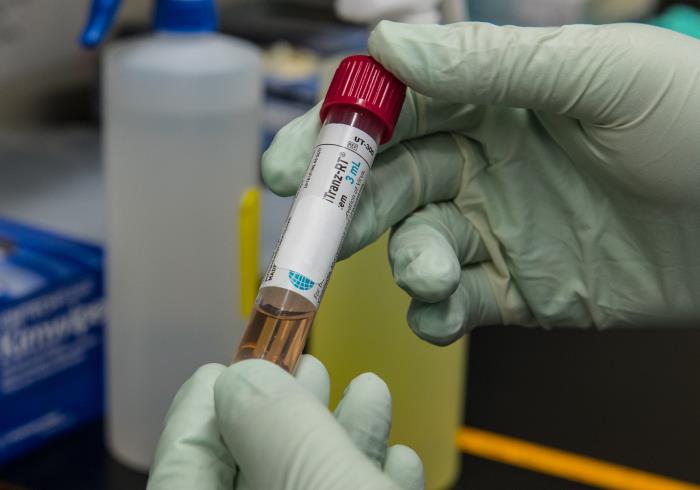
“This image depicted a test tube with viral transport media that contained a patient’s sample to be tested for the presence of SARS-CoV-2, the virus that causes COVID-19.” Source: CDC PHIL

Naturally, this interim report has been heavily criticized. The conclusion reached in this report obviously differs from the two peer-reviewed Science articles published earlier this year that found 1) the Huanan Seafood Wholesale Market was the epicenter of the initial outbreak and 2) that there were at least two distinct spillovers from animals sold at the market. Scientists supporting the market origin still have not identified which animals were infected or where they came from, as no animals were tested before the market was shut down early in 2020. Of this, the report states “Critical corroborating evidence of a natural zoonotic spillover is missing. While the absence of evidence is not itself evidence, the lack of corroborating evidence of a zoonotic spillover or spillovers, three years into the pandemic, is highly problematic.”

Dr. Michael Worobey, Department Head of Ecology and Evolutionary Biology at the University of Arizona and a co-author of both the Science articles, addressed the report with Science news, with the news team writing “Michael Worobey, an evolutionary biologist at the University of Arizona who has co-authored scientific reports examining data from the early days of the pandemic that provide some of the strongest support for a jump from animals to humans, speculates that the timing of the report’s release could be “a cynical effort to try to win Republican votes” in the upcoming midterm congressional and state elections.  Or, Worobey says, “it could just be a bunch of staffers with no ability to understand the science who stumbled across a bunch of misinformation and disinformation-filled tweets.” (“Senator Burr felt enough compelling, open-source information had been gathered during staff’s comprehensive review of the facts that an interim report was appropriate,” a senior aide to the minority staff told Science.)”

After the minority interim report was released, Senator Patty Murray, Chair of the Senate HELP Committee, issued a statement on “continuing bipartisan oversight efforts into the origins of the virus that causes COVID-19” that did not address the minority report. Sen. Murray stated “COVID-19 has caused so much pain, hardship, and loss for people in Washington state, across our country, and all across the globe. As I’ve said time and again, it is absolutely critical we learn the lessons from this pandemic so that we never find ourselves in a similar situation again—and that, of course, includes undertaking a full examination of how COVID-19 first emerged.”

“That’s why I made it a top priority as Chair to craft bipartisan legislation to strengthen our public health and pandemic preparedness systems with the PREVENT Pandemics Act—which, among so many other vital steps, would establish an independent task force to conduct a comprehensive review of COVID’s origins and the federal response to the pandemic. And it’s why, in 2021, I announced a bipartisan oversight effort with Senator Burr into the origins of this virus. The HELP Committee is continuing bipartisan work on this oversight report, and I remain committed to passing the PREVENT Pandemics Act, which advanced out of Committee with overwhelming bipartisan support.”

More on the Boston University Controversy

While the controversy surrounding experiments conducted on SARS-CoV-2 at Boston University has subsided some, attention has shifted to how such research is regulated. The New York Times explains the concerns, writing “But the uproar highlighted shortcomings in how the U.S. government regulates research on pathogens that pose a risk, however small, of setting off a pandemic. It revealed loopholes that allow experiments to go unnoticed, a lack of transparency about how the risk of experiments is judged and a seemingly haphazard pattern in the federal government’s oversight policy, known as the P3CO framework.” It also notes “Even as the government publicly reprimanded Boston University, it raised no red flags publicly about several other experiments it funded in which researchers manipulated coronaviruses in similar ways. One of them was carried out by the government’s own scientists.”
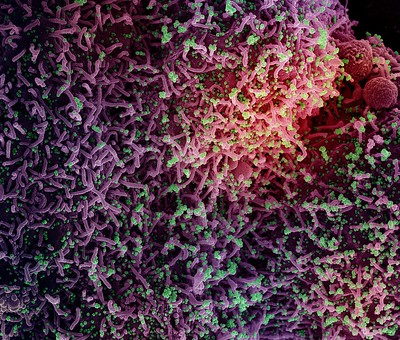
“Colorized scanning electron micrograph of a cell infected with a variant strain of SARS-CoV-2 virus particles (green), isolated from a patient sample.” Source: NIH Image Library

Nature explains the issue further, writing “At issue is whether — and when — researchers modifying SARS-CoV-2 or other deadly pathogens need to keep regulators and funding agencies such as the US National Institutes of Health (NIH) informed about their work, even if the agencies didn’t fund the experiments in question. Studies that make pathogens more transmissible or virulent are sometimes called ‘gain of function’ research.”

The issue now being discussed is if federal guidance is too vague in explaining what disclosures are required after a proposal is approved and research is progressing. Dr. Greg Koblentz told The New York Times “The government should be providing the guidance to help people figure this out,” and explained to Grid that “Pandemic prevention and lab safety rules “only move in fits and starts,” said biodefense professor Gregory Koblentz of George Mason University, pointing to the long list of past controversies. “And we only make progress where there is some crisis, or perceived crisis, that grabs people’s attention.”

Koblentz also commented on the confusion surrounding “gain of function”, telling Grid “‘Gain of function’ — we should retire that term, it really doesn’t help us in that debate,” said Koblentz. “It has become shorthand for a class of research that people are worried about because of the risks it poses, but it is a term that really has outlived its usefulness.” The term garnered attention during a number of political debates, including back-and-forths between Senator Rand Paul and Dr. Anthony Fauci.

Grid also noted that, though many experts disagree on the utility of the term “gain of function, “There’s one point all of the experts who spoke to Grid agreed on — the Boston University chimera experiments do point to a need for stronger federal government oversight of potentially dangerous bugs. The fact that we are still debating whether to review genetically altering known pandemic pathogens, not even potential ones, said Koblentz, “is an indictment of both the self-governance model that the virology community largely supports and the current policy.”
NCT Magazine

In this issue focused on 4th generation chemical weapons, several experts offer their perspective on existing and emerging issues. Drs. Stefano Costanzi and Gregory Koblentz authored a piece for this issue, “Controlling Novichok Nerve Agents After the Skripal and Navalny Incidents”. They cover the history of this family of nerve agents and international disarmament and nonproliferation attempts before discussing the Skripal and Navalny incidents as evidence that both the Chemical Weapons Convention and Australia Group Chemical Weapons Precursors list need to be revised to better address Novichok agents. They conclude “The ability of the CWC and AG to adapt to the new challenge posed by these fourth-generation nerve agents demonstrates the resilience of the chemical weapon nonproliferation regime. However, further measures need to be implemented to reduce the opportunities for proliferators to develop and use Novichok nerve agents. Embracing a family-based approach to listing chemicals of proliferation concern would strengthen the nonproliferation regime and the adoption of technologies such as cheminformatics can facilitate the transition to this new approach to containing the threat posed by chemical weapons.”

“Designation of Three Syrian Military Officials Due to Involvement in Gross Violations of Human Rights”

On the topic of chemical weapons, the US State Department recently designated multiple military officials from the Syrian regime, it declared in a press release this week. The statement reads in part, “Of the atrocities committed by the Assad regime, some of which rise to the level of war crimes and crimes against humanity, few are as inhumane and abhorrent as the repeated use of chemical weapons against civilians.  In August 2013, the Syrian Artillery and Missile Directorate of the Syrian Armed Forces launched rockets carrying the nerve agent sarin, a deadly chemical, on Ghouta, a suburb of Damascus, killing at least 1,400 people, many of them children.  Today, we are taking additional action to promote accountability.”

“The Department of State is designating three Syrian regime military officials involved in these airstrikes, pursuant to Section 7031(c) of the Department of State, Foreign Operations, and Related Programs Appropriations Act, 2022.  Brigadier General Adnan Aboud Hilweh, Major General Ghassan Ahmed Ghannam, and Major General Jawdat Saleebi Mawas were involved in gross violations of human rights, namely the flagrant denial of the right to life of at least 1,400 people in Ghouta. As a result of today’s action, Hilweh, Ghannam, and Mawas as well as their immediate family members are ineligible for entry into the United States.”

“To Fix American’s Biodefense Strategy, Think Smaller”

From Breaking Defense: “It’s a natural reflex for the US government to try to develop strategies to deal with issues as broadly as possible, to handle a wide array of contingencies. But in the op-ed below, Al Mauroni of Air University’s Center for Strategic Deterrent Studies argues that the Biden administration’s biodefense strategy, expanding on past strategies, has grown too cumbersome and is in need of a cure of its own.”

ASPR TRACIE on Major Radiological or Nuclear Incidents

ASPR’s Healthcare Emergency Preparedness Information Gateway (TRACIE) recently released this updated document providing an “overview of health and medical response and recovery needs following a radiological or nuclear incident…” It also outlines resources for planners. Other relevant resources can also be found on the TRACIE CBRN page.

“Preventing and Preparing for Pandemics with Zoonotic Origins”

This piece from the Council on Foreign Relations discusses how factors that drive pathogen emergence and spread should influence decisions on investments in pandemic preparedness and response. It discusses priority pathogens, primary pandemic prevention, and secondary pandemic prevention and pandemic preparedness, concluding that “There is unprecedented support at the highest levels of government to enhance global pandemic prevention and preparedness. The recent decision to create a new fund for pandemics out of the World Bank and the ongoing negotiation for a pandemic agreement within the World Health Organization are potentially transformational. It is critical that comprehensive action be taken quickly through these efforts before the world’s collective attention moves on to the next crisis. Failure to do so means future generations will live less healthy and productive lives than we have today.”

“COVID-19 Genomic UK (COG-UK) Consortium: Final Report”

In this article from RAND Health Quarterly, Marjanovic et al. write in their abstract “The ability to sequence and understand different variants of the SARS-CoV-2 virus and their impact is crucial to inform policy and public health decisions. Soon after the UK went into its first lockdown in March 2020, the CCOVID-19 Genomics UK (COG-UK) Consortium was launched. COG-UK is a collaboration of experts in pathogen genomics including academic institutions, public health agencies, the Wellcome Sanger Institute, NHS Trusts and Lighthouse Labs. RAND Europe evaluated how COG-UK delivered against its objectives, for example how it contributed to advancing scientific knowledge about SARS-CoV-2, informing public health decisions, and providing information that can be used to evaluate the effectiveness of vaccines and treatments. The evaluation also examined the diverse factors that influenced COG-UK progress and impact, including enablers and challenges, and considered implications for the future.”

Coronavirus Vaccines R&D Roadmap

From CIDRAP: “CIDRAP, with support from the Bill & Melinda Gates Foundation and The Rockefeller Foundation, has led an international collaborative effort to develop a coronavirus vaccines research and development (R&D) roadmap (CVR). The CVR aims to serve a strategic planning tool to facilitate R&D, coordinate funding, and promote stakeholder engagement aimed at generating broadly protective coronavirus vaccines.”

“A key component of roadmap development is gathering feedback via a public comment period. The draft CVR is now available for a 4-week public comment period from October 24 – November 18, 2022. Feedback gathered during the public comment period will be used to refine the roadmap, resulting in a final roadmap made available in early 2023.”

“The draft CVR may be downloaded in PDF format. Comments should be submitted via this survey, which will be available through November 18, 2022. The survey offers the opportunity to share general and specific comments on the roadmap; the team welcomes as little or much feedback as you would like to provide.”

“The Future of Infodemic Surveillance as Public Health Surveillance”

In this recent piece from a supplement issue of Emerging Infectious Diseases, Chiou et al. write “Public health systems need to be able to detect and respond to infodemics (outbreaks of misinformation, disinformation, information overload, or information voids). Drawing from our experience at the US Centers for Disease Control and Prevention, the COVID-19 State of Vaccine Confidence Insight Reporting System has been created as one of the first public health infodemic surveillance systems. Key functions of infodemic surveillance systems include monitoring the information environment by person, place, and time; identifying infodemic events with digital analytics; conducting offline community-based assessments; and generating timely routine reports. Although specific considerations of several system attributes of infodemic surveillance system must be considered, infodemic surveillance systems share several similarities with traditional public health surveillance systems. Because both information and pathogens are spread more readily in an increasingly hyperconnected world, sustainable and routine systems must be created to ensure that timely interventions can be deployed for both epidemic and infodemic response.”

COVID Taking the Fun Out of Fungi?

The WHO recently released its first fungal priority pathogens list (FPPL)- “the first global effort to systematically prioritize fungal pathogens, considering their unmet research and development (R&D) needs and perceived public health importance.” The WHO explains that “The WHO FPPL aims to focus and drive further research and policy interventions to strengthen the global response to fungal infections and antifungal resistance. The WHO FPPL list is divided into three categories: critical, high and medium priority. The report presents these categories and proposes actions and strategies for policymakers, public health professionals and other stakeholders; targeted at improving the overall response to these priority fungal pathogens including preventing the development of antimicrobial resistance. Three primary areas for action are proposed, focusing on: (1) strengthening laboratory capacity and surveillance; (2) sustainable investments in research, development, and innovation; and (3) public health interventions.”

This comes amid a spike in certain fungal diseases during the COVID-19 pandemic. Additionally, the report found that “Currently, fungal infections receive less than 1.5% of all infectious disease research funding,” and that “most treatment guidelines are informed by limited evidence and expert opinion.”

Opinion: “To Fight Misinformation, We Need to Teach That Science Is Dynamic”

In this piece for Scientific American, Dr. Carl Bergstrom, Daniel Pimentel, and Dr. Jonathan Osborne discuss public ignorance of the scientific community, identifying ways this can be rectified. They write, “It’s easy to see why so many of us struggle to distinguish trustworthy science from what is flawed, speculative or fundamentally wrong. When we don’t learn the nature of consensus, how science tends to be self-correcting and how community as well as individual incentives bring to light discrepancies in theory and data, we are vulnerable to false beliefs and antiscience propaganda. Indeed, misinformation is now a pervasive threat to national and international security and well-being.”

They discuss the need to develop a population of competent outsiders, explaining “Giving people more facts is insufficient. Instead, we need a populace that can tell which sources of information are likely to be reliable, even if the science itself is beyond what they learned in school, so that they can identify when they need scientific information to make decisions in their own lives. Just as critically, people must understand enough about how science attempts to minimize error. In other words, every member of our society needs to be what science education researcher Noah Feinstein calls a “competent outsider.”

What We’re Listening To 🎧

This Week in Virology 948: Breathless with David Quammen

“David Quammen returns to TWiV to discuss how he wrote his new book ‘Breathless’, a story about the science and the scientists behind the race to understand the pandemic coronavirus SARS-CoV-2.” Listen here.

Conversations Before Midnight

The Bulletin of the Atomic Scientists is hosting its Bulletin Annual Gathering on November 9, 2022, at 5 pm CDT virtually. This is the Bulletin’s “signature event” and it aims to allow guests to engage in high-level conversations with influential voices tracking man-made threats. At the event, “Each virtual table has an expert, established and up-and-coming specialists in the fields of nuclear risk, climate change, disruptive technologies, and biosecurity. These discussion leaders include members of the Bulletin’s Science and Security Board, Board of Sponsors, and invited experts from around the world. Below are a few samples for this year’s gathering.”‘ Table experts include our own Dr. Greg Koblentz, so be sure to check out this event’s info page here.

Briefings in Preparation for the Ninth BWC Review Conference

From UNIDR: “The 1972 Biological Weapons Convention (BWC) is a cornerstone in the regime to prevent the hostile use of biology. The Ninth BWC Review Conference will take place in late November 2022 and presents an important opportunity to take stock of the past and chart a course for the future of this increasingly important agreement. In support of preparations for the Ninth BWC Review Conference and beyond, UNIDIR has recently published several reports intended to stimulate thinking on substantive issues related to the BWC.”

“This virtual event will bring together the authors of the latest UNIDIR publications on BWC topics to provide short outlines of the key insights and ideas in their respective reports for State Parties to consider ahead of the Review Conference. These include verification, advances in science and technology, international cooperation, and potential outcomes of the Review Conference. The presentations will be followed by a moderated interactive discussion with the participants.” This event will take place on November 7 at 2 pm CET, online. Learn more and register here.

Infection Prevention and Control: Incorporating Lessons Learned in Managing Special Pathogens

“After nearly three years responding to the COVID-19 pandemic, hospitals and other healthcare facilities have learned many lessons about the management of special pathogens and essential infection prevention and control practices. The U.S. Department of Health and Human Services (HHS) Administration for Strategic Preparedness and Response’s Technical Resources, Assistance Center, and Information Exchange (ASPR TRACIE) and the National Emerging Special Pathogens Training and Education Center (NETEC) invite you to learn more about some of those lessons. Speakers will share their perspectives on how our approach to outbreaks has changed since the pandemic began. They will address issues such as infection prevention for healthcare workers and patients and mitigating disease spread. Speakers will also highlight newly developed tools and resources. This webinar will take place November 7 at 2:00 pm ET. Register today!”

From One Health Commission-World Bank Open Call

“Open Call for Experts to serve on the Technical Advisory Panel to the Governing Board of the Pandemic Prevention, Preparedness and Response Financial Intermediary Fund (“PPR FIF”)”- November 3 Deadline

“World Bank has posted a call for experts to serve on the Technical Advisory Panel (TAP) to the Governing Board of the Pandemic Prevention, Preparedness and Response Financial Intermediary Fund (“PPR FIF”).”

“The TAP will comprise a multidisciplinary pool of up to 20 experts, bringing a diverse range of independent technical and financial expertise relevant to PPR FIF-supported projects and activities. To register your interest in being considered for the PPR FIF TAP, please submit documents to ppr_fif_secretariat@worldbank.org using the subject line “Expression of interest for the PPR FIF TAP”

Speaking of One Health…November 3 is One Health Day

Mark your calendars for this year’s One Health Day on November 3. One Health Day is an international campaign that was launched in 2016. The One Health Commission explains that “The goal of One Health Day is to bring attention around the world to the need for One Health interactions and for the world to ‘see them in action’. The One Health Day campaign is designed to engage as many individuals as possible from as many arenas as possible in One Health education and awareness events, and to generate an inspiring array of projects worldwide.” If you are hosting an event on this day, you can register your event here with the Commission. A list of registered One Health Day events for 2022 is also available here.
Pandora Report: 10.21.2022

It’s Friday again and this time we are kicking it off with some great news from our program. We then discuss the Biden administration’s new National Biodefense Strategy and the Boston University preprint controversy. As always, we finish the week out with new publications and upcoming events, including an entire issue supplement of Clinical Infectious Diseases dedicated to anthrax. Finally, mark your calendars, because November 3 is One Health Day (more on that in the announcements section).

First, Some Good News from the Biodefense Program!

Biodefense Faculty Member Joins Council on Strategic Risks and Wins Schar School of Policy and Government Distinguished Alumni Award…All in One Week!

This week, Dr. Saskia Popescu, an epidemiologist, prominent infection prevention consultant, an assistant professor at the Schar School, and more (No, seriously, she does all that AND more.) was named a Senior Fellow at the Janne E. Nolan Center on Strategic Weapons at the Council on Strategic Risks. In case that somehow was not enough for one week, she is also being honored today as this year’s Schar School of Policy and Government Distinguished Alumni Award winner. Read all about Dr. Popescu’s hero origin story here on the Schar School site.

Biodefense PhD Student Named Bulletin of the Atomic Scientists Editorial Fellow

Kimberly Ma, a first year Biodefense PhD student and senior analyst with the Preparedness division at the Association of State and Territorial Health Officials, was recently named an Editorial Fellow at the Bulletin of the Atomic Scientists. Over the next year, she will author a number of pieces on biosecurity for the Bulletin, so keep an eye out for her upcoming work!

The Biden Administration Releases New National Biodefense Strategy

This week, the White House announced the release of the new National Biodefense Strategy and President Biden’s intent to sign National Security Memorandum 15-“Countering Biological Threats, Enhancing Pandemic Preparedness, and Achieving Global Health Security”. The strategy takes a comprehensive approach, aiming to make improvements in these areas-“detect pandemic and other biological threats, “prevent outbreaks from becoming epidemics and prevent biological incidents before they can happen,” “prepare for pandemics and other biological incidents,” “rapidly respond to outbreaks when they occur,” and “recover from a pandemic or biological incident.”

Among other points about the strategy, the Nuclear Threat Initiative explains that “The new strategy’s requirement that the National Security Council and the Office of Science and Technology Policy conduct an interagency policy review regarding biosafety and biosecurity norms and oversight for life sciences research also is valuable. As the largest funder of bioscience and biotechnology research and development in the world, the U.S. Government has a responsibility to put guardrails in place to prevent laboratory accidents or deliberate misuse of the tools of modern bioscience and biotechnology. Doing so can have a profound direct impact in reducing global biological risks and serve as a valuable example for other funders around the world.”

National Security Memorandum 15, “National Security Memorandum on Countering Biological Threats, Enhancing Pandemic Preparedness, and Achieving Global Health Security,” directs the heads of agencies addressed to:

  1. “implement the Biodefense Strategy, as well as related strategies such as the U.S. Global Health Security Strategy, and include biodefense-related activities, including resourcing and achieving the goals of the Biodefense Strategy and the priorities, targets, and actions of its Implementation Plan, within their strategic planning and budgetary processes;
  2. in the event of the determination of a nationally or internationally significant biological incident, implement Federal response efforts in accordance with Homeland Security Presidential Directive 5 of February 28, 2003 (Management of Domestic Incidents), Presidential Policy Directive 8 of March 30, 2011 (National Preparedness), Presidential Policy Directive 44 of November 7, 2016 (Enhancing Domestic Incident Response), and Federal Government response and recovery frameworks and operational plans;
  3. coordinate their biodefense policies with other agencies that have responsibilities or capabilities pertaining to biodefense, as well as with appropriate non-Federal entities;
  4. share information and coordinate decision-making related to the biodefense enterprise; and
  5. monitor, evaluate, and hold their respective agencies accountable for the implementation of section 3(a) of this memorandum.”

The memorandum also states that “To facilitate effective implementation of the Biodefense Strategy, within 90 days of the date of this memorandum and at least quarterly thereafter, the NSC staff Directorate for Global Health Security and Biodefense shall convene lead agencies identified in the Biodefense Strategy’s Implementation Plan at the Assistant Secretary level.  These agencies shall brief the NSC staff on progress towards key milestones and timelines, as well as on critical gaps and barriers to progress.  The NSC staff Directorate for Global Health Security and Biodefense shall provide updates quarterly to the APNSA based off of these briefs, summarizing progress towards the implementation of the Biodefense Strategy by highlighting the extent to which the goals and objectives are being met, outlining major gaps and impediments to timely and effective implementation, and presenting options for overcoming these gaps.  The APNSA shall provide to the President, on an annual basis, a memorandum summarizing these updates.”

Transcripts of the background call on this new strategy are available here, and check out the Council on Strategic Risks discussion of the strategy here.

Boston University Controversy

Last week, researchers from Boston University’s (BU) National Emerging Infectious Diseases Laboratories (NEIDL) posted results from their controversial work on BA.1 variant spike proteins in preprint. As Science explains, “They took the gene for Omicron’s surface protein, or spike protein, which SARS-CoV-2 uses to enter cells and added it to the genome of a “backbone” virus—a variant of SARS-CoV-2 from Washington state that was identified soon after the pandemic first emerged in Wuhan, China, in early 2020. The objective was to tease apart whether Omicron’s spike protein explains why it is less pathogenic (meaning it causes less severe disease). The answer could lead to improved COVID-19 diagnostic tests and better ways to manage the disease, the preprint authors say.”

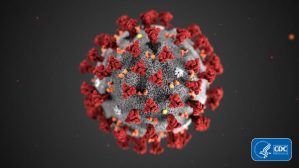
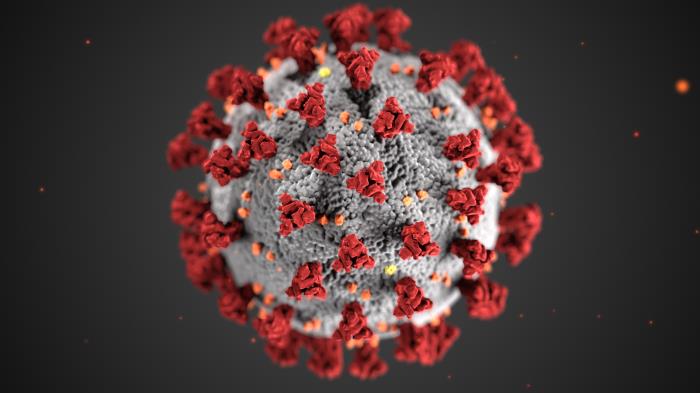
“This illustration, created at the Centers for Disease Control and Prevention (CDC), reveals ultrastructural morphology exhibited by coronaviruses. Note the spikes that adorn the outer surface of the virus, which impart the look of a corona surrounding the virion, when viewed electron microscopically. A novel coronavirus, named Severe Acute Respiratory Syndrome coronavirus 2 (SARS-CoV-2), was identified as the cause of an outbreak of respiratory illness first detected in Wuhan, China in 2019. The illness caused by this virus has been named coronavirus disease 2019 (COVID-19).”; Source: CDC PHIL

By Monday, a UK tabloid, Daily Mail, ran with the story, indicating in their headline that the lab had created a strain of SARS-CoV-2 with an “80 percent kill rate,” and had created a much more dangerous strain of the virus. While the Daily Mail piece is very clearly from a tabloid, this did spark debate online, as this preprint describes what some argue is gain of function research. This work was not approved by the National Institutes of Health, though it was approved by the institutional biosafety committee at NEIDL. Critics argue that this study lacks scientific value and that its potential risks were not properly reviewed before it was conducted. Some, including Francois Balloux, a virologist at University College London, expressed concern over the study’s relevance to human health, noting that findings in mice frequently do not carry over to humans. Others, however, are far less alarmed, generally arguing that the hybrid virus is far less lethal than the original, pointing to the extreme sensitivity of the mice used in the study, and highlighting that similar SARS-CoV-2 variants have already emerged before later fading away.

The university responded to accusations made in the Daily Mail, stating “We want to address the false and inaccurate reporting about Boston University COVID-19 research, which appeared today in the Daily Mail,” said the BU statement. “First, this research is not gain-of-function research, meaning it did not amplify the Washington state SARS-CoV-2 virus strain or make it more dangerous. In fact, this research made the virus replicate less dangerous.” BU also explained that “The animal model that was used was a particular type of mouse that is highly susceptible, and 80 to 100 percent of the infected mice succumb to disease from the original strain, the so-called Washington strain,” says Corley. “Whereas Omicron causes a very mild disease in these animals.” On the topic of funding, BU said the lab “…did not amplify the [backbone] SARS-CoV-2 virus strain or make it more dangerous. In fact, this research made the virus replicate less dangerous,” as reason for not reporting the study to NIH. They also stated this work did not need to be cleared by NIH as it was not directly funded by the agency as the lab used NIAID grants only to pay for tools and platforms.

Science reports that “Emily Erbelding, director of the NIAID division that helped fund the work, said the hybrid virus experiments weren’t described in BU’s grant proposal or progress reports. But she said if BU had informed NIAID about its plans, the institute probably would have evaluated it to determine whether it qualified for review by a special Department of Health and Human Services (HHS) committee.”

NIH also released a statement this week: “The National Institute of Allergy and Infectious Diseases (NIAID), part of the National Institutes of Health, did not review nor issue awards for experiments described in a pre-print article on SARS-CoV-2 research at Boston University’s National Emerging Infectious Diseases Laboratories (NEIDL). NIH is examining the matter to determine whether the research conducted was subject to the NIH Grants Policy Statement or met the criteria for review under the HHS Framework for Guiding Funding Decisions about Proposed Research Involving Enhanced Potential Pandemic Pathogens (HHS P3CO framework)…”

While the debate is sure to keep raging, it is also likely to add fuel to the ongoing review of federal oversight policies for GoF research led by the National Science Advisory Board for Biosecurity (NSABB). According to Science, “In September, an NSABB task force issued a draft report that recommended the review policy be expanded to sweep in some kinds of research, and some pathogens, that are now exempt. And experts on all sides of the GOF debate have said the criteria for review need to be clearer. The government is expected to release new rules as early as next year. (For more, see this week’s feature in Science.)”

However, as Science has also previously written, “A U.S. clampdown will have no sway over privately funded GOF research or what happens in other countries, which typically lack policies like the P3CO framework. In Japan and most of Europe, for example, oversight is limited to rules on biosafety and, sometimes, biosecurity along with voluntary self-regulation, say biosecurity experts Gregory Koblentz of George Mason University and Filippa Lentzos of King’s College London. It’s too soon to say how a 2020 Chinese biosafety law will affect PPP research, they say.”

“National Security Snapshot: Department of Defense and Intelligence Community Preparedness for Biological Threats”

The Government Accountability Office (GAO) recently released this National Security Snapshot co-authored by Dr. Brian Mazanec, an alumnus of the Biodefense PhD program. This snapshot discusses core issues like biopreparedness and the PRC’s intent to exploit US genetic data. The authors write, “We made several key recommendations to improve how DOD and the Intelligence Community prepare for and respond to biological threats. DOD is taking a number of positive steps, such as coordinating with partners to research and develop vaccines. But, DOD doesn’t have a comprehensive strategy that, for example, shows where biodefense resources are needed.”

“Public Health Preparedness: HHS Should Address Strategic National Stockpile Requirements and Inventory Risks”

GAO also recently released this report discussing the Department of Health and Human Services’ inventory planning reports and their failure to “meet most legal requirements enacted in 2019 or communicate risks associated with not meeting recommended inventory levels. This is partly because HHS hasn’t updated its processes for completing the reports and a key advisory body was inactive.” This report makes a number of recommendations while also noting that HHS’s leadership and coordination of public health emergencies is on the office’s high risk list.

“COVID-19: A Warning – Addressing Environmental Threats and the Risk of Future Pandemics in Asia and the Pacific”

From the UN Environment Programme: “This scientific review begins with the history of humans and zoonoses and provides clarity on the issues of zoonoses and emerging infectious diseases. It then presents the seven anthropogenic drivers of zoonotic disease emergence as well as the concept of viral mixing. After providing rich context, this review continues to outline solutions that address the intricate link between nature and human health and strategies to prevent future zoonotic outbreaks.”

“”It was Compromised”: The Trump Administration’s Unprecedented Campaign to Control CDC and Politicize Public Health During the Coronavirus Crisis”

The House Select Subcommittee on the Coronavirus Crisis recently released its third installment of staff reports detailing the Trump administration’s response to the COVID-19 pandemic. In the report, the committee explains its findings from its investigation into the Trump administration’s “rampant political interference with the federal public health response to the coronavirus pandemic.” Chairman Clyburn released this statement about the report: “The Select Subcommittee’s investigation has shown that the previous administration engaged in an unprecedented campaign of political interference in the federal government’s pandemic response, which undermined public health to benefit the former president’s political goals. As today’s report shows, President Trump and his top aides repeatedly attacked CDC scientists, compromised the agency’s public health guidance, and suppressed scientific reports in an effort to downplay the seriousness of the coronavirus. This prioritization of politics, contempt for science, and refusal to follow the advice of public health experts harmed the nation’s ability to respond effectively to the coronavirus crisis and put Americans at risk. As we continue to recover from the coronavirus crisis, we must also continue to work to safeguard scientific integrity and restore the American people’s trust in our public health institutions.”

Clinical Infectious Diseases “Issue Supplement 3, Anthrax Preparedness”

This issue supplement of Clinical Infectious Diseases is all about anthrax, including articles ranging from “Responding to the Threat Posed by Anthrax: Updated Evidence to Improve Preparedness” to “Risk Factors for Severe Cutaneous Anthrax in a Retrospective Case Series and Use of a Clinical Algorithm to Identify Likely Meningitis and Evaluate Treatment Outcomes, Kyrgyz Republic, 2005-2012”. So, if it has been a while since you were deeply concerned about anthrax, this issue is for you!

“How SARS-CoV-2 Battles Our Immune System”

If you like medical illustrations and interactive timelines, this one is for you. This new story available from Science walks readers visually through SARS-CoV-2’s interaction with the human immune system, offering detailed yet easily understood, general explanations along the way. Readers can even learn about the virus’s different proteins and their specific effects on the immune system.

What We’re Listening To 🎧

This Podcast Will Kill You: Episode 107: Sepsis: It’s a Mess

“Over the years of the podcast, we have often struggled with questions of why: why pathogens act the way they do, why certain people get sick while others don’t, or why we know little about some diseases. This episode is no exception – sepsis certainly inspires many “whys”. But for perhaps the first time on the pod, we find ourselves grappling not only with “why?” but also with “what?”. What, indeed, is sepsis? Ask a dozen doctors and you may get a dozen different answers. Our first goal for this episode is to sift through the various definitions of sepsis and what we know about its pathology to get a firm handle on this deadly consequence of infection. We then turn our sights to a thrilling period of sepsis history – Joseph Lister and his carbolic acid spray – before attempting to address the status of sepsis around the world today. By the end of the episode, your picture of sepsis may not be crystal clear, but hopefully the edges are a little less blurry.” Listen here on Spotify or wherever you listen to podcasts!

Project Responder 6: Evolving Response Environment Webinar

From DHS: “You’re invited to join the Department of Homeland Security (DHS) Science & Technology Directorate (S&T) for a briefing on the Project Responder 6 report, designed to document emergency response capability needs across significant changes in the operating environment. The innovative approach this data collection effort—now in its sixth generation—takes is to bring together S&T’s First Responder Resource Group (FRRG), which includes responders from traditional (fire service, law enforcement, emergency medical services, emergency management) and non-traditional (public health, public works, medical examiner/coroner, search and rescue) response agencies, to focus on identifying and validating needs across disciplines.” Learn more and register here. Download the report here. This event will take place on October 24, at 11 am ET.

Addressing Health Inequities by Strengthening Antibiotic Stewardship

From NCEZID: “Please join The National Center for Emerging and Zoonotic Infectious Disease (NCEZID) on Tuesday, October 25, 2022, at 10 a.m. EDT for the next AMR Exchange webinar on addressing health inequities by strengthening antibiotic stewardship entitled Addressing health inequities by strengthening antibiotic stewardship. The discussion will feature experts from CDC, The Pew Charitable Trusts, the Federal Office of Rural Health Policy, and Emory University School of Medicine who work to strengthen antibiotic use and prescribing and improve the quality of health care across the United States. Please register here.”

South Korea as a Global Vaccine Hub

The Korea Economic Institute of America is hosting this event October 27, at 3 pm EST virtually: “Early in the pandemic, South Korea drew widespread praise for the speed and efficiency of its response to slowing the spread of the virus and saving lives. However, despite this initial success, South Korea faced vaccine nationalism and other access challenges in its effort to secure Covid-19 vaccines. Spurred by these challenges, South Korea established a national strategic policy to become a global vaccine hub, not only to meet the current and future public health needs of its own population but also to assist low- and middle-income countries (LMICs) facing even starker obstacles in accessing safe and effective vaccines.”

“Please join KEI for a discussion with the Thomas Byrne, Claire Callahan, Irene Kyoung, and Salomé Da Silva Duarte Lepez about how global vaccine access and equity was hindered by the shortcomings of national and bilateral vaccine diplomacy and multilateral mechanisms during the Covid-19 pandemic, and how South Korea’s demonstrated capabilities to rise as global vaccine development, manufacturing and training hub will help bolster global public health capacities in the future.” Register here.

The Case for the Use of “Red Lines” in the Governance of Life Sciences Research with David Relman

From CISAC: “The nature of evolving risks in life sciences research, a brief history of risk governance, and the case for the use of so-called “red lines” in the governance of life sciences research will be presented. The goals of this presentation are to elicit discussion about the benefits and pitfalls of red lines, or guardrails, in general, including a historical perspective, and options for public policy recommendations to address concerns about the present and future risks arising from life sciences research.” This event will take place on October 27, at 3:30 pm PT. Register here.

Infection Prevention and Control: Incorporating Lessons Learned in Managing Special Pathogens

“After nearly three years responding to the COVID-19 pandemic, hospitals and other healthcare facilities have learned many lessons about the management of special pathogens and essential infection prevention and control practices. The U.S. Department of Health and Human Services (HHS) Administration for Strategic Preparedness and Response’s Technical Resources, Assistance Center, and Information Exchange (ASPR TRACIE) and the National Emerging Special Pathogens Training and Education Center (NETEC) invite you to learn more about some of those lessons. Speakers will share their perspectives on how our approach to outbreaks has changed since the pandemic began. They will address issues such as infection prevention for healthcare workers and patients and mitigating disease spread. Speakers will also highlight newly developed tools and resources. This webinar will take place November 7 at 2:00 pm ET. Register today!”

ICYMI: IARPA, Gingko Bioworks and Draper Announce New Technologies to Detect Engineered DNA

This week, Gingko Bioworks, Draper, and IARPA held an event to announce the completion of IARPA’s Finding Engineering-Linked Indicators (FELIX), a program aimed at improving existing biodetection and surveillance capabilities. “The event featured a panel with Catherine Marsh, IARPA Director; David A. Markowitz, IARPA Program Manager; Joshua Dunn, Head of Design, Ginkgo Bioworks; Laura Seaman, Principal Scientist and Machine Intelligence Group Leader, at Draper; and Erin Rosenberger, Senior Member of Technical Staff, Biological Microsystems Group, at Draper. During the panel, the panelists discussed the program findings and also featured a demo of the research results.” A recording of the livestream is available here.

November 3 is One Health Day

Mark your calendars for this year’s One Health Day on November 3. One Health Day is an international campaign that was launched in 2016. The One Health Commission explains that “The goal of One Health Day is to bring attention around the world to the need for One Health interactions and for the world to ‘see them in action’. The One Health Day campaign is designed to engage as many individuals as possible from as many arenas as possible in One Health education and awareness events, and to generate an inspiring array of projects worldwide.” If you are hosting an event on this day, you can register your event here with the Commission. A list of registered One Health Day events for 2022 is also available here.
Pandora Report: 10.14.2022

Happy Friday! This week we discuss the release of the Biden administration’s National Security Strategy and new findings about the prevalence and challenges of long COVID. We also cover a number of new publications, a German podcast episode on the 1979 anthrax outbreak in Sverdlovsk (featuring our own Dr. Sonia Ben Ouagrham-Gormley!), and upcoming events.

Biden Administration Releases National Security Strategy

The Biden administration released its National Security Strategy (NSS)this week, building on the 2021 Interim NSS. This iteration of the NSS re-incorporates climate change as a national security threat, continues to define the threats China and Russia pose to the US, and includes “Triad” with a capital “T” to make sure there’s plenty of discussion about the document here in the Beltway. As the NSS has in the past, this version includes a section dedicated to pandemics and biological threats, which estarts by explaining that “COVID-19 has killed nearly 6.5 million people around the world, including more than 1 million Americans, but the next pandemic could be much worse—as contagious but more lethal. We have a narrow window of opportunity to take steps nationally and internationally to prepare for the next pandemic and to strengthen our biodefense.”

This section also discusses the notion that “no one is safe until everyone is safe,” and acknowledges that “some of our international institutions have fallen short in the past and need to be reformed.” It concludes with a paragraph discussing the need to address risks posed by deliberate and accidental biological risks “including through our ability to rapidly detect, identify, and attribute agents, and to develop medical countermeasures,” by working to strengthen the BWC, prevent terrorist acquisition of BW, and reinforcing “norms against biological weapons’ development and use.”

This comes on the heels of statements released this week by the US State Department and German Federal Foreign Office on the need to better cooperate to reduce biological threats globally. Both statements discuss the multi-faceted nature of these problems, including challenges created by mis- and disinformation and the need for increased global cooperation in the face of these threats, again highlighting the increasing importance of these issues.

Long COVID Gaining Recognition…Finally

This week, Hastie et al.’s article in Nature Communications discussing long COVID made waves in the media and online. The authors conducted a study in a Scottish cohort consisting of 33,281 laboratory-confirmed SARS-CoV-2 infections and 62,957 never-infected individuals. Participants were issued questionnaires at 6, 12, and 18 months. The authors found that “Of the 31,486 symptomatic infections,1,856 (6%) had not recovered and 13,350 (42%) only partially.” They also found that “Asymptomatic infection was not associated with adverse outcomes. Vaccination was associated with reduced risk of seven symptoms.” Notably, participants with previous symptomatic COVID-19 infections reported long-lasting symptoms like breathlessness, heart palpitations, difficulty focusing, and confusion at rates more than double that of those who were not previously infected. They also reported other related symptoms, like muscle aches and other heart problems.

There were some challenges in the study, however. For example, approximately 90% of participants were white, which is not helpful in trying to better understand risks and burdens of long COVID in other groups. Furthermore, only 4% were vaccinated (most with just one dose) before they were infected. However, this study does more concretely demonstrate the breadth of this problem and what it could mean for future pandemics.

A German study was also published this week in BMJ that found a “considerable burden of long-COVID symptoms, especially fatigue and neurocognitive impairment (“brain fog”), at 6 to 12 months—even among young and middle-aged adults who had mild infections,” according to CIDRAP. This study found that women were at higher risk for developing long COVID and “The researchers said the study revealed long-COVID symptom clusters with individually and societally relevant implications that also affected younger adults with mild initial infections. “Given the individual and societal burden of post-covid sequelae, the underlying biological abnormalities and causes need urgent clarification to define adequate treatment options and develop effective rehabilitation measures,” they concluded.”

Other studies have also linked long COVID to conditions like postural tachycardia syndrome (POTS). In the case of POTS, 41% of people diagnosed with the syndrome already reported a viral infection preceding the onset of POTS symptoms pre-pandemic. Because of this connection, the UK’s National Institute for Health and Care Excellence now even recommends testing for POTS in patients with long COVID. These studies build on mountains of anecdotal evidence from patients and providers alike, demonstrating that long COVID is a very real and serious danger that has already impacted many of us.

The WHO Director General, Dr. Tedros Adhanom Ghebreyesus, recently authored a piece in The Guardian discussing long COVID, what WHO is doing about it, and what countries around the world should do to support those suffering with it. He explains, “Mostly data is only available from high-income countries, which means that we don’t currently have a clear picture on how many people are actually suffering. Current estimates suggest that tens of millions, and perhaps more, have contracted long Covid, and about 15% of those diagnosed with the condition have experienced symptoms for at least 12 months.”

He also discussed the shift in investment strategies this requires of countries, writing “Early in the pandemic, it was important for overwhelmed health systems to focus all of their life-saving efforts on patients presenting with acute infection. However, it is critical for governments to invest long-term in their health system and workers and make a plan now for dealing with long Covid. This plan should encompass, providing immediate access to antivirals to patients at high risk of serious disease, investing in research and sharing new tools and knowledge as they’re identified to prevent, detect and treat patients more effectively. It also means supporting patients physical and mental health as well as providing financial support for those who are unable to work.”

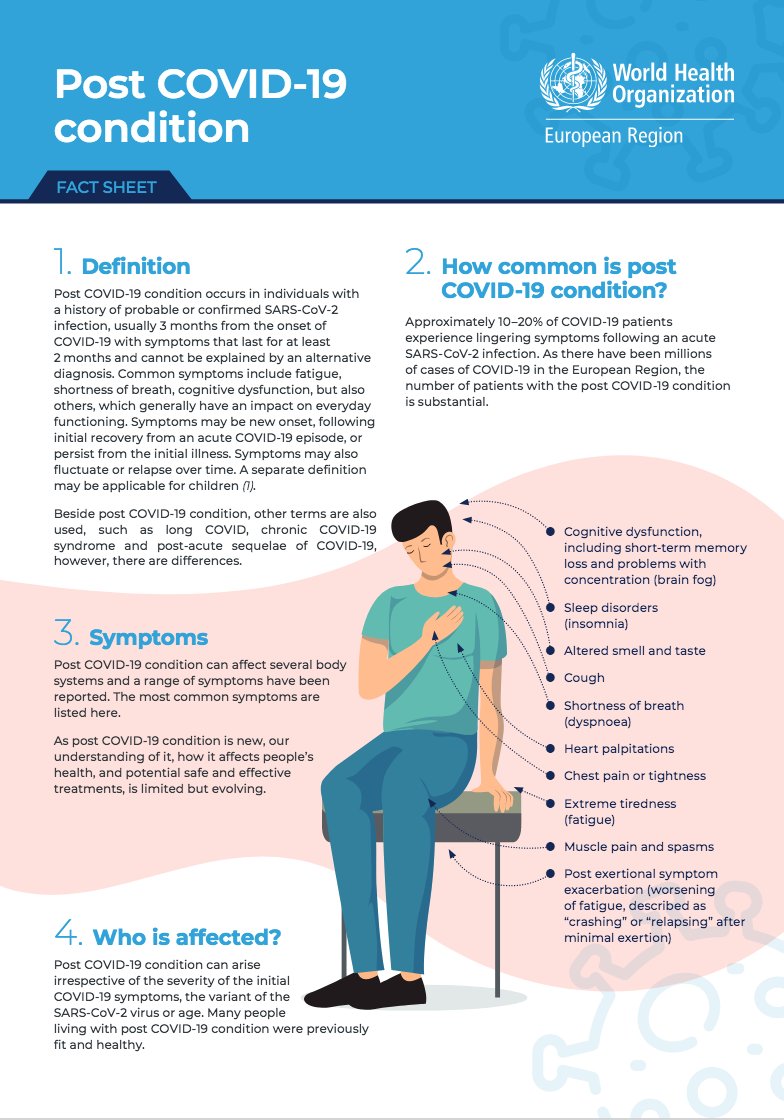
WHO/Europe also issued a factsheet discussing the need for rehabilitation, recognition, and research focused on lingering COVID symptoms that is available here.

WHO Europe Factsheet Discussing Long COVID, Source: https://www.who.int/europe/news/item/10-10-2022-rehabilitation–recognition-and-research-needed-for-people-living-with-long-covid–new-who-europe-factsheet

“COVID Prompts Global Surge in Labs That Handle Dangerous Pathogens”

Smriti Mallapaty’s recent article in Nature News discusses the growing number of BSL-3 and 4 certified facilitates globally and rising concerns about the costs and risks they present. This article covers new facilities across Asia as well as Russia’s promise that it will build 15 new BSL-4 facilities. Mallapaty also quoted GMU’s Dr. Greg Koblentz in the article, writing “Since the COVID-19 pandemic began, plans to build 27 BSL-4 labs have been announced worldwide, say Gregory Koblenz, a biodefence researcher at George Mason University in Arlington, Virginia, and Filippa Lentzos, a biosecurity researcher at King’s College London, who have tracked the number and distribution of BSL-4 facilities globally. “These will likely take several years to design, build and commission,” says Lentzos.”

“Pandemic Origins and a One Health Approach to Preparedness and Prevention: Solutions Based on SARS-CoV-2 and Other RNA Viruses”

In this recent Proceedings of the National Academy of Sciences article, Keusch et al. discuss the importance of One Health in improving and integrating biosafety and biosecurity. Their abstract explains “COVID-19 is the latest zoonotic RNA virus epidemic of concern. Learning how it began and spread will help to determine how to reduce the risk of future events. We review major RNA virus outbreaks since 1967 to identify common features and opportunities to prevent emergence, including ancestral viral origins in birds, bats, and other mammals; animal reservoirs and intermediate hosts; and pathways for zoonotic spillover and community spread, leading to local, regional, or international outbreaks. The increasing scientific evidence concerning the origins of Severe Acute Respiratory Syndrome Coronavirus-2 (SARS-CoV-2) is most consistent with a zoonotic origin and a spillover pathway from wildlife to people via wildlife farming and the wildlife trade. We apply what we know about these outbreaks to identify relevant, feasible, and implementable interventions. We identify three primary targets for pandemic prevention and preparedness: first, smart surveillance coupled with epidemiological risk assessment across wildlife–livestock–human (One Health) spillover interfaces; second, research to enhance pandemic preparedness and expedite development of vaccines and therapeutics; and third, strategies to reduce underlying drivers of spillover risk and spread and reduce the influence of misinformation. For all three, continued efforts to improve and integrate biosafety and biosecurity with the implementation of a One Health approach are essential. We discuss new models to address the challenges of creating an inclusive and effective governance structure, with the necessary stable funding for cross-disciplinary collaborative research. Finally, we offer recommendations for feasible actions to close the knowledge gaps across the One Health continuum and improve preparedness and response in the future.”

Science published a news article discussing this paper, writing “‘Our paper recognizes that there are different possible origins, but the evidence towards zoonosis is overwhelming,” says co-author Danielle Anderson, a virologist at the University of Melbourne. The report, which includes an analysis that found the peer-reviewed literature overwhelmingly supports the zoonotic hypotheses, appeared in the Proceedings of the National Academy of Sciences (PNAS) on 10 October.”

The article continued with “The panel’s own history reflects the intensity of the debate. Originally convened as a task force of the Lancet COVID-19 Commission, a wide-reaching effort to derive lessons from the pandemic, it was disbanded by Columbia University economist Jeffrey Sachs, the commission’s chair. Sachs alleged that several members had conflicts of interest that would bias them against the lab-origin hypothesis.”

“WHO’s Response to COVID-19 – 2022 Mid-Year Report”

“This mid-year report provides a consolidated update on WHO’s response to the COVID‐19 pandemic between January and July 2022, against the objectives laid out in the Strategic Preparedness and Response Plans (SPRP) for 2021 and 2022.”

“With the aim of ending the acute phase of the pandemic by the end of the year, WHO, in collaboration with partners, has supported countries to further strengthen their surveillance systems; ensure more equitable access to tests, treatments, and essential supplies worldwide; make health systems more resilient; and reduce exposure to the disease by empowering and enabling communities.”

“The report highlights the role of WHO at the global, regional, and local levels, and across the key elements of an effective emergency response – from implementation and operational support, to developing evidence and research, and providing strong coordination and planning. By working with partners, including multi-agency and multi-partner operational platforms, regional and national public health and scientific institutes, governments, communities, donors, UN organizations and NGOs and the private sector, WHO helped bring the world together to provide direct technical and operational support to countries implementing their national COVID-19 response plans.”

“Epidemics That Didn’t Happen”

On a much more cheerful note, check out Prevent Epidemics’ online feature, “Epidemics That Didn’t Happen”. This page explores six epidemics that were prevented thanks to solid cooperation and good public health responses, including averted epidemics of Ebola, Nipah, cholera, rabies, influenza, and dengue. As the page notes, these cases present common themes, including “Speed is essential,” “Well-coordinated action at the local level is crucial to preventing epidemics,” “Community engagement pays off,” and “Health care workers need to be trained, supported, and provided with access to resources and assistance to stop epidemics.”

“Russia’s Alleged Bioweapons Claims Have Few Supporters”

Jez Littlewood and Dr. Filippa Lentzos recently published this piece in this Bulletin of the Atomic Scientists discussing the outcome of September’s Article V Formal Consultative Meeting requested by Russia. They write “For the fourth time this year, Russia accused the United States and Ukraine of being in non-compliance with the Biological and Toxins Weapons Convention (BTWC)—and once again found little support for its allegations. At the conclusion of the Article V Formal Consultative Meeting in September, no other state formally accused these two nations of non-compliance. Russia stands alone in its allegations, with limited support from eight other states. In contrast, more than five times as many backed the United States and Ukraine in rejecting the allegations; the meeting ended with a procedural report that noted no consensus regarding the outcome.”

“Addressing Inaccurate and Misleading Information About Biological Threats Through Scientific Collaboration and Communication in Southeast Asia”

From the National Academies: “Misinformation about outbreaks, epidemics, and pandemics is a decades-old problem that has been exacerbated by the rise of the internet and the widespread use of social media. Some false claims may be addressed through sound scientific analysis, suggesting that scientists can help counter misinformation by providing evidence-based, scientifically defensible information that may discredit or refute these claims. This report explains how scientists can work collaboratively across scientific disciplines and sectors to identify and address inaccuracies that could fuel mis- and disinformation. Although the study focused on a scientific network primarily in Southeast Asia, it is relevant to scientists in other parts of the world. A companion “how-to-guide”, available in print and in digital form, outlines practical steps that scientists can take to assess mis- or disinformation, determine whether and how they should address it, and effectively communicate the corrective information they develop.”

“Counterfeit PPE: Substandard Respirators and Their Entry Into Supply Chains in Major Cities”

This recent article from Urban Crime was co-authored by the Schar School’s Dr. Louise Shelley and discusses challenges in ensuring legitimate PPE is available and what this means for definitions of threats to human life. The abstract reads “Over 58 million counterfeit respirators of substandard quality unable to protect individuals from infection have been seized globally since the start of the COVID-19 pandemic. These seizures have primarily occurred in urban warehouses and ports around the world according to analysis of public and corporate data shared with the authors. The presence of tens of millions of respirators in storage facilities prior to distribution demonstrates that urban areas are key elements of illicit supply chains. Data suggests that the concept of urban insecurity needs to be reconsidered in light of illicit supply chains for counterfeit respirators and their role in facilitating disease transmission in urban areas. The analysis presented in this article suggests that threats to human life should not be confined narrowly to violent acts or the consumption of drugs. Human life can also be threatened through the massive distribution of counterfeit N95 masks during a pandemic, a problem that has become more acute with more contagious mutations of COVID-19.”

Dr. Shelley is the Omer L. and Nancy Hirst Endowed Chair and a University Professor at George Mason University. She is in the Schar School of Policy and Government and directs the Terrorism, Transnational Crime and Corruption Center. She is a leading expert on the relationship between terrorism, organized crime, and corruption as well as human trafficking, transnational crime, and terrorism with a particular focus on the former Soviet Union. She also specializes in illicit financial flows and money laundering. 

What We’re Listening To 🎧

Waffen der Wissenschaft – Die Spur der Sporen

For our German-speaking readers, a Viertausendhertz podcast episode on the 1979 outbreak of anthrax in Sverdlovsk: “Im Frühjahr 1979 sterben in der geschlossenen sowjetischen Stadt Sverdlovsk Dutzende Menschen an Milzbrand. Ein ungeheurer Verdacht kommt auf: Handelt es sich um einen Unfall mit Biowaffen? Der Forscher Matthew Meselson und der Journalist Peter Gumbel erzählen von ihren Nachforschungen vor Ort. Das Team spricht außerdem mit den Biowaffen-Experten Filippa Lentzos, Sonia Ben Ouagrham-Gormley und Andrew Weber.”

Translation: “In the spring of 1979, dozens of people died of anthrax in the closed Soviet city of Sverdlovsk. A tremendous suspicion arose: was it an accident involving biological weapons? The researcher Matthew Meselson and the journalist Peter Gumbel discuss their investigations on site. The team also speaks with bioweapons experts Filippa Lentzos, Sonia Ben Ouagrham-Gormley, and Andrew Weber.”

Event Summaries

Check out event summaries written by Geoffrey Mattoon, a Biodefense MS student, for two recent events from the Council on Strategic Risks-“Building Capacities for Addressing Future Biological Threats” and “The American Pandemic Preparedness Plan: One Year of Progress & the Path Forward”.

Schar School Master’s and Certificate Virtual Open House

Join us for next week’s Master’s and Certificate Virtual Open House on Wednesday, October 19, at 7 pm ET, to learn more about the Schar School of Policy and Government and the Biodefense Graduate Program. The online session will provide an overview of our programs, student services, and admissions requirements. Our admissions staff will be available afterward to answer any questions you may have. Register here!

Infection Prevention and Control: Incorporating Lessons Learned in Managing Special Pathogens

“After nearly three years responding to the COVID-19 pandemic, hospitals and other healthcare facilities have learned many lessons about the management of special pathogens and essential infection prevention and control practices. The U.S. Department of Health and Human Services (HHS) Administration for Strategic Preparedness and Response’s Technical Resources, Assistance Center, and Information Exchange (ASPR TRACIE) and the National Emerging Special Pathogens Training and Education Center (NETEC) invite you to learn more about some of those lessons. Speakers will share their perspectives on how our approach to outbreaks has changed since the pandemic began. They will address issues such as infection prevention for healthcare workers and patients and mitigating disease spread. Speakers will also highlight newly developed tools and resources. This webinar will take place November 7 at 2:00 pm ET. Register today!”

Disinformation: An Emerging War Weapon

“Hosted by the National Defense University Foundation and Moderated by President and CEO, James Schmeling, join us for this interactive virtual discussion. Brief Talk Description: Explore how Russia, China and other entities use misinformation, disinformation, and malinformation as weapons of war and their impact on global security and American democracy.” This online webinar will be hosted on October 20 at 12 pm EST. Register here.

Reflections on Science Communication & Human Rights Amid Public Health Emergencies

“On October 20 (10:30-11:30 am ET),  join Dr. Bina Venkataraman, Editor-at-Large for The Boston Globe, and Dr. Chris Beyrer, Director of Duke University’s Global Health Institute, for a virtual discussion of science communication during public health emergencies, the role of public health researchers and journalists in advancing human rights, and emerging lessons from the COVID-19 pandemic.”

“The conversation will be moderated by Prof. Helle Porsdam, Professor of Law and Humanities and UNESCO Chair in Cultural Rights, Centre for Interdisciplinary Studies of Law, Faculty of Law, University of Copenhagen.” Register here.

Third International Summit on Human Genome Editing

The Third International Summit on Human Genome Editing will take place March 6-8, 2023, at the Francis Crick Institute, London, UK. “Building on previous events held in Washington, DC (2015) and Hong Kong (2018), this Summit will continue the important dialogue around human genome editing. It will facilitate a global discussion on somatic and germline genome editing, including developments in clinical trials and genome editing tools such as CRISPR/Cas9. Earlier this year a three-part series of online events Looking Ahead to the Third Human Genome Editing Summit discussed some of the key topics of the meeting. The three-day summit is being organised by the Royal Society, the UK Academy of Medical Sciences, the US National Academies of Sciences and Medicine and The World Academy of Sciences.”

“Find out more about the Summit’s Planning Committee, chaired by Professor Robin Lovell-Badge FRS FMedSci. Further information about the Summit agenda will be released soon, and registration to attend the event in person and online is now open.”

Event Summary: Building Capacities for Addressing Future Biological Threats

Defining Convergence

By Geoffrey Mattoon, Biodefense MS Student

On Tuesday, 20 September, the Council on Strategic Risks (CSR) hosted the “Building Capacities for Addressing Future Biological Threats” webinar, which included keynote speaker Dr. David Christian (Chris) Hassell, Deputy Assistant Secretary for Preparedness and Response at ASPR, speakers Dr. Pardis Sabeti, Professor at the Center for Systems Biology at Harvard University, and Dr. Akhila Kosaraju, CEO and President of Phare Bio, and was moderated by Dr. Yong-Bee Lim, Deputy Director of the Janne E. Nolan Center on Strategic Weapons and George Mason Biodefense Program alumni. Together they discussed the evolving biological threats landscape and the means that exist to improve preparedness and response. This event follows the previous webinar “The American Pandemic Preparedness Plan: One Year of Progress & The Path Forward,” also hosted by CSR on 8 September, and focused heavily on the need for greater cooperation, collaboration, and innovation to prepare for the next pandemic.

             Dr. Hassell began the event by highlighting the misconceptions associated with the terms “convergence” and “bioconvergence” within the field. His concern was that these terms have become buzzwords within biodefense and their use implies that the different fields and disciplines necessary for biodefense are converging or cooperating organically. Such a misconception leads those within and outside of the field to assume that unity of effort is common and effortless, which is not the case. Barriers to convergence are prevalent and numerous, both in government and private sectors. Dr. Hassell provided an example from his previous experience in the Department of Defense developing chemical detectors, comparing a lack of higher-level convergence to the lack of standardized interfaces on different detectors preventing operators from gaining competency on all systems after mastering any single system. Such stove-piping of systems and efforts prevents convergence and is common across biodefense. The solution is a greater degree of crosstalk between disciplines working towards a unified solution or goal. Providing another example of this failure of convergence, Dr. Hassell highlighted the recent Pentagon appropriations for biodefense failing to account for the need for cyber funding to be successful against future threats as that discipline becomes more critical.

            Dr. Hassell also indicated that biological threats, in addition to the biodefense, are converging. As biotechnology and other life sciences continue to advance, the line between chemical and biological threats blurs. Previous research has demonstrated this growing convergence, from opioid-producing yeast conducted by Galanie et al. published in Nature to chemical synthesis of toxins conducted by Matinkhoo et al. in the Journal of the American Chemical Society. He urges a greater convergence of chemical and biodefense disciplines to effectively overcome these threats in the future. Such efforts would come at a substantial cost and require the reorganization of numerous government agencies, but it may be necessary to respond to the evolving threat landscape and enable more efficient use of future funding to unify efforts.

            Dr. Hassell then commented on the need for greater inclusion of data sciences, data technologies, and nanotechnologies in future biodefense efforts. The necessity of greater convergence between chemical and biodefense and the inclusion of these disciplines is a key requirement identified in Biodefense in the Age of Synthetic Biology, a report prepared by the National Academies for the Department of Defense in 2018. The addition of these technology-based disciplines is indicative of a greater requirement for technology convergence in chemical and biodefense efforts to combat the rising technology integration in the threat landscape. Modern biotechnology has created significant risk of dual use to create ever greater biological threats. Dr. Hassell pointed to the recent “Dual Use of Artificial-Intelligence-Powered Drug Discovery,” published by Urbina et al. in Nature Machine Learning, that indicated how easy it may be for a machine learning system designed with the best of intentions to identify new therapeutic disease inhibitors to be reprogrammed to instead identify novel toxin molecules. In that report, the MegaSyn system was able to generate 40,000 novel VX molecules in less than 6 hours. Dr. Sonia Ben Ouagrham-Gormley, Associate Professor at George Mason University and author of Barriers to Bioweapons, indicated such results do not directly equate to actionable threats on the Radiolab episode 40,000 Recipes for Murder that covered this journal article, but they still are indicative of the evolving chemical and biological threat landscape. Dr. Hassell also indicated the convergence of other disciplines critical to future biological threats, including climate change, which is enabling greater zoonotic spillover events, generating new and often novel biological threats.

            Dr. Pardis Sabeti underscored deadly infectious diseases as an existential threat to humanity during her remarks. She agreed with Dr. Hassell’s call for greater convergence and stated we must aspire to use technology to outpace the evolution of diseases so that we can be more anticipatory and less reactionary in the face of future outbreaks. She emphasized that COVID-19, though a recent a traumatic pandemic, is not the biggest threat we have faced or could face in the future. She argued we are on the precipice of cataclysm if we do not relentlessly pursue these efforts of convergence to enhance biodefense. Infectious disease is an existential threat that we can address because the tools necessary for biodefense are not bespoke or esoteric. Effective current and future biodefense tools, she argued, must be broad spectrum, offer daily value, contain transferrable benefits and knowledge, and be embraced at a cultural level to be effective. In line with the previous CSR webinar on COVID-19, Dr. Sabeti called for a greater commitment to community engagement as a key effort to combat future biological threats.

            Dr. Akhila Kosaraju then emphasized the need to take novel technologies required for biodefense out of the lab and into the field. She also supported the need for greater convergence, stating such efforts must be intentional to be successful. Her company, Phare Bio, exemplifies such efforts, employing AI and deep learning to enable rapid antibiotic discovery to overcome rising drug resistances. This approach provides Phare Bio a strategy to overcome the drug development “valley of death” where most current pharmaceutical development fails and presents an opportunity for other organizations like it across biodefense.  Modern biodefense efforts must emphasize biotechnology, relying on computational biologists, bioengineers, and other technical experts to maximize advances in the field.  She also indicated a need for organizations like The Audacious Project, a backer of Phare Bio, to effectively unify disciplines to solve intractable problems like drug resistance. The Audacious Project is a “collaborative funding initiative catalyzing social impact on a grand scale” across a broad range of disciplines that seeks to de-risk and encourage innovation. Injection of philanthropic, grant, or even government funding sources to adequately de-risk the “valley of death” and other obstacles is essential to future preventative and treatment therapeutics. Additionally, biodefense must strive to recognize small players in the field that often offer bespoke technologies and solutions that can accelerate efforts beyond that of the usual bigger players, as demonstrated throughout the COVID-19 pandemic. Efforts like Operation Warp Speed serve as foundational examples to the benefits such efforts can provide to the future of biodefense.  

Pandora Report: 5.15.2020

The Coronavirus Chronicles
We recently introduced our new series,The Coronavirus Chronicles, which is a collection of stories, based on the personal and professional experiences of the faculty, students, and alumni of the Biodefense Graduate Program, about life during the pandemic. From lab safety to parenting and even healthcare work, The Coronavirus Chronicles have detailed the lives of so many of our students and alumni working in COVID-19 response. We hope these stories help the public better understand the challenges posed by COVID-19 and how current and former members of the Biodefense Graduate Program have responded to these challenges and contributed to the pandemic response at the local, national, and international levels. This week, we’re launching a new story by biodefense doctoral alum Jomana Musmar, who shares how she’s responding to COVID-19 with HHS while multitasking as a mother and spouse to an ED physician. Jomana’s experiences provide insight into the challenges we’re facing in terms of pandemic response and lesson we can all take away, noting that “Another important lesson learned is the need for everyone—from households to corporations to governments—to have a Plan B for continuity of operations for every aspect of life. Our reliance on the internet, laptops, and mobile phones has shown how pivotal a role this technology plays in being able to survive.”

COVID-19 Reopening and Recovery: Proposed Plans for the US
GMU biodefense doctoral student and Pandora Report associate editor Rachel-Paige Casey is breaking down the recovery plans to help get the U.S. back from COVID-19. “Throughout April, strategies regarding the reopening of the US economy and its associated public health factors were published by the White House with the Centers for Disease Control and Prevention (CDC), the Center for Health Security at Johns Hopkins University, the Rockefeller Foundation, and the Edmond J Safra Center for Ethics at Harvard University. The four strategies discussed here either outline phases for resuming activity or describe systems to enable and assist safe reopening.” Casey details the four strategies, their phases, and provides a risk assessment in this detailed review of what experts are suggesting for COVID-19 recovery. Read more here.

Schar School Event- Public Policy in the Pandemic Age: How COVID-19 is Reshaping our Government, Economy, and Society
Join the Schar School Faculty, Alumni, Schar Alumni Chapter, and Dean Mark Rozell for an engaging virtual panel on the future of public policy post COVID-19 – COVID-19: How the Pandemic is Reshaping our Government, Economy, and Society. This virtual event will be moderated by Biodefense Graduate Program director Dr. Gregory Koblentz, and will be held from 2-3:30pm EST on Wednesday, May 20, 2020. The COVID-19 pandemic is presenting unprecedented challenges to the United States and the rest of the world. Not since the “Spanish Flu” of 1918 have we experienced a pandemic of this scale and severity. Aside from the steep and growing human toll of the outbreak, virtually every aspect of our personal and professional lives are being affected. The sheer breadth of issues impacted by COVID-19 is overwhelming: public health, medicine, government, the economy, international trade, education, national security, politics, and technology, to name just a few. The effects of the pandemic are also magnified by existing cleavages within our society ranging from hyperpartisanship to racial disparities to socioeconomic inequalities. You can read more about our distinguished panel members and register for the event here.

The Future Bioweapons Threat: Lessons from the COVID-19 Pandemic
Looking for a webinar to discuss lessons learned from COVID-19 and the implications for bioweapons threat analysis? The Council on Strategic Risks (CSR) is thrilled to present its first LIVE webinar on May 28 from 3:00-4:30pm EST, which will examine the future bioweapons threat from the perspective of the COVID-19 pandemic. Panelists include Max Brooks, author of World War Z and Devolution, Nonresident Fellow at The Modern War Institute and Atlantic Council, Honorable Andrew C. “Andy” Weber, Senior Fellow at Council on Strategic Risks, former Assistant Secretary of Defense for Nuclear, Chemical, and Biological Defense Programs at the Pentagon, GMU Biodefense alum Dr. Saskia Popescu, Epidemiologist and Senior Infection Preventionist, HonorHealth, and Dr. Alexander Titus, Chief Strategy Officer, Advanced Regenerative Manufacturing Institute and Senior Fellow at Council on Strategic Risks. Register for event here.

 Social Distancing During Pandemics According to the GAO
The US Government Accountability Office (GAO) released a brief report about the science behind social distancing to curb the spread of COVID-19. Based on historical studies, the Centers for Disease Control and Prevention (CDC) asserts that the area of highest risk is within 3 feet of an infected individual, but a buffer radius of 6 feet is recommended. These recommendations are founded on studies in the fields such as fluid mechanics, epidemiology, and microbiology. Other studies found that infectious droplets can travel beyond 6 feet, but the degree of infectivity of particles that travel relatively long distances is uncertain. The distance that an infectious droplet can travel depends on several factors such droplet size, humidity level, and air currents. For instance, the smaller the droplet, the farther it can potentially travel. The goal of social distancing (keeping a personal bubble with a 6-foot radius) is to reduce the rate of transmission; however, it is not a perfect non-medical countermeasure. The speeds and distances of viral particle travel from coughing or sneezing are difficult to determine with absolute precision. Additional challenges beyond the science and calculations are related to the difficulty in application: the psychological impacts of social distancing and isolation are yet to be fully realized. Read the full two-page here.

DHS S&T Launches Indoor Predictive Modeling Tool for Coronavirus Stability
This week, the Science and Technology Directorate (S&T) of the Department of Homeland Security (DHS) released a predictive modeling tool that estimates the natural decay of SARS-CoV-2 based on temperature within the 70-95°F range and relative humidity between 20-60%. The current iteration of the model is for stainless steel or ABS plastic surface types; nitrile (a compound used in disposable gloves) surface type will be available soon. For example, on a stainless steel or ABS plastic surface with a temperature of 77°F/25°C and relative humidity of 33%, the half-life of the virus is 11.52 hours, or 0.48 days. This model was developed to inform response efforts regarding the persistence of the virus on certain surfaces (fomites) and under specific combinations of conditions. Additional enhancements in the pipeline for this model include droplets in the air vs. on a surface, expanded temperature and humidity ranges, different surfaces. The model can be found here.

Pandemic dispatch: An infection-prevention expert on shortages, misinformation, and health worker strain on the coronavirus front line
GMU Biodefense doctoral alum and infection prevention epidemiologist Saskia Popescu discusses her experiences on the frontlines during the COVID-19 pandemic. “For the past four months, I’ve had a front row seat to the coronavirus pandemic. Working in a major hospital system, I’ve seen first-hand the issues that have come to define the crisis: the concerns about supplies, the torrent of misinformation, and the critical problem of health care worker exposure to COVID-19. Infection preventionists such as myself work in hospitals to stop the spread of infections among patients, staff, and visitors alike. Despite our training, the coronavirus has tested hospital programs like mine, forcing us to drastically change our daily practices.” Read more here.

News of the Weird: Pajama Sales in a Pandemic
Though many industries are struggling to survive as sales have plummeted during the response to COVID-19. Pajamas, however, are in high demand as many of us remain at home; pajama sales have soared by 143%since lockdown. Real pants are optional when working from home.   According to CNN Business, eCommerce sales were up almost 50% in April, because in-person retail shopping is currently limited, if not impossible. Other items with growing demand include beer and liquor and creative audio equipment like sound mixers.

News of the Weird: Cocktail-Friendly Face Masks
Artist Ellen Macomber designed an unconventional face mask that sports a small hole fit for a straw that allows the wearer to enjoy cocktails in Covid-19. Macomber is based in the Big Easy, also called New Orleans, a city known for its round-the-clock party life. These bedazzled and flamboyant face masks run $60 a pop. She does admit that the masks are not the “best form of prevention” given its opening right into the mouth.

Biosecurity Is the Lesson We Need to Learn from the Coronavirus Pandemic
Dr. Daniel Gerstein, graduate of the Biodefense PhD program, and Dr. James Giordano wrote in The National Interest about the biosecurity lessons we need to learn from the coronavirus pandemic. Though there is no scientific evidence that the novel coronavirus was human-made, humans do bear some the blame for this pandemic. Humans disrupt and destroy the environment and its habitats, mix species as bush meat in wet markets, and experiment with dangerous pathogens. The COVID-19 pandemic and the human behavior that encouraged it signal the need to develop a new approach to biosafety and biosecurity that “addresses the full range of biological threats that humankind and the global environment will face in the future.” As humans continue to intrude into natural habitats, the risk of zoonotic disease spillover continues to increase. Over the last thirty years, 30 new human pathogens have been found, most of which originated in animals. Gerstein and Giordano encourage the expansion of biosafety and biosecurity to include consideration of the global biological ecosystem. Read the full article here.

WHO Announces the Launch of New Informational Apps
The World Health Organization (WHO) launched two COVID-19 apps for smartphones. One is for healthcare workers and the other is for the general public. For healthcare workers, the WHO Academy app provides information on COVID-19 resources, guidance, training, and virtual workshops. For the general public, the WHO Info app provides access to the latest COVID-19 news and developments. Both apps can be downloaded for free from the Google Play Store and the Apple App Store.


Pandora Report: 4.10.2020

National Security in the Age of Pandemics
This week, Dr. Gregory Koblentz, Director of the Biodefense Program, and Dr. Michael Hunzeker, Associate Director of the Center for Security Policy Studies, published a commentary asserting that pandemic preparedness cannot be improved if it becomes another item on the military’s infinite laundry list of missions and threats. The COVID-19 outbreak on the USS Theodore Roosevelt forced the ship’s commander to temporarily scale back operations it so that its crew could isolate themselves and later resume their duties after subduing the infection. Now, the USS Ronald Reagan is reporting positive COVID-19 cases and may have no option but to follow the lead of the Roosevelt. These events are warnings to our national security apparatus that pandemic diseases are clear and present threat to our Nation and her allies and interests. Koblentz and Hunzeker urge the US to recognize this threat and adjust to it with urgency and intensity. For more, Koblentz and Hunzeker’s article is available here.

Summer Workshop on Pandemics, Bioterrorism, and Global Health Security 
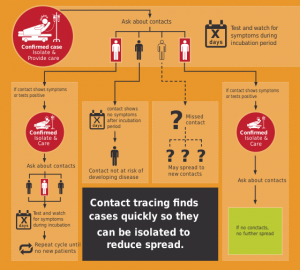
Are you registered for the summer workshop yet? From July 13-16, 2020, GMU Biodefense will be hosting a three and a half-day workshop on all things global health security. Leaders in the field will be discussing hot topics like COVID-19, pandemic preparedness, vaccine development, medical countermeasures, synthetic biology, and healthcare response to COVID-19. This is also a great networking opportunity as past participants come from a range of government agencies, NGOs, universities, think tanks, and foreign countries. Don’t miss out on the early-bird discount for this immersive workshop – you can register here.

Syria’s Chemical Weapons Attacks
The Organisation for the Prohibition of Chemical Weapons (OPCW) published its First Report by the Investigation and Identification Team, which strongly linked the Syrian government to the March 2017 sarin and chlorine attacks on a rebel town. Specifically, in March 2017, three projectiles – two containing sarin and one containing chlorine – were dropped from aircraft of the Syrian Arab Air Force into Ltamenah in northern Syria. In total, these weapons affected at least 106 individuals. The Washington Post reported on these findings and our own Dr. Gregory Koblentz, Director of the Biodefense Program, stated that strong evidence for attribution is the first concrete step toward punishing such violations of international laws and agreements. The OPCW is not a judicial body with the ability to determine and punish criminal acts, so action must be taken by the Executive Council and the Conference of the States Parties to the Chemical Weapons Convention, the United Nations Secretary-General, and the international community. The full report is available here.

Smartphones and Contact Tracing
Contact tracing is a vital piece to not only public health response, but also helping “reopen” the country (keep reading for more insight into this). Unfortunately, it’s quite time and resource intensive and with widespread transmission and not enough public health resources, this can limit our capabilities. Some countries though, are looking to employe technology into contact tracing – “In Singapore, a country that’s turned to cellphone contact tracing, an app called TraceTogether uses Bluetooth to log when a user’s phone encounters another phone that has the app. If someone tests positive for COVID-19, he or she can easily submit a log of all the other people (and their phones) that he or she came in contact with in the last 21 days.” GMU’s HyunJung Kim has recently discussed this approach in South Korea – noting that “The disclosure of epidemic information is very significant for disease prevention and control, because we experienced the failure of disease control and prevention during the MERS of 2015,” HyunJung Kim, a PhD student in biodefense at George Mason University who has written about Korea’s public health system, says. “Information … makes people more comfortable because they can avoid and detour the areas/hospitals where infected people visited.” On the other hand though, such tech has ethical implications. Kelly Hills, Co-Principal of Rogue Bioethics noted that “We really have to keep our guard up against surveillance technologies that could be abused with very little effort, especially since these technologies are almost always going to be used against our most marginalized communities.” Damien P Williams, PhD candidate in the Department of Science, Technology, and Society at Virginia Tech recently noted that “First and foremost, supposedly anonymized tracking data sits alongside facial recognition as technologies which, in the current formulation of Western society, have no non-oppressive, non-exploitable use. Things developed and deployed in times of heightened fear and concern will very likely become every day violations.” Williams further stated that “Such a tool simply reinforces the trend toward surveillance technologies which are both insidiously abusive and also disproportionately leveraged against already-marginalized communities, as it has been the case with technologies and research in this vein, for literally centuries.” Where do you land on the topic?

Small Groups, Big Weapons: The Nexus of Emerging Tech and WMD Terrorism
A paradigm shift in recent years has seen non-state actors enhance their capabilities to utilize WMDs. A new report from the Combating Terrorism Center at West Point, is shedding light on the changes to capital, infrastructure, and intellectual capacity that are aiding this shift. “The commercialization of emerging technologies is reducing the financial, intellectual, and material barriers required for WMD development and employment. This report surveys three emerging technologies—synthetic biology, additive manufacturing (commonly known as 3D printing), and unmanned aerial systems—and examines the nexus of each with nuclear, biological, and chemical weapons agent proliferation. It examines how non-state actors might use these emerging technologies to overcome traditional barriers against the development and employment of WMD.” You can access the report here.

Inadequate PPE Distribution & Hospital Experiences Responding to COVID-19: A U.S. Survey 
Just how well are hospitals managing the current pandemic? Not well. A survey by the HHS Office of the Inspector General (OIG) across U.S. hospitals from March 23-27, revealed some sobering insight into the challenges of COVID-19 response. 323 hospitals across 46 states chatted with the OIG on this (at least the hospital administrators did…). At a glance, the findings aren’t surprising – severe shortages of testing supplies, extended waits for results, widespread shortage of PPE, challenges maintaining adequate staffing and hospital capacity to treat patients, shortages of critical supplies and materials, and changing/sometimes inconsistent guidance. “Hospitals reported that changing and sometimes inconsistent guidance from Federal, State, and local authorities posed challenges and confused hospitals and the public. Hospitals reported that it was sometimes difficult to remain current with Centers for Disease Control and Prevention (CDC) guidance and that they received conflicting guidance from different government and medical authorities, including criteria for testing, determining which elective procedures to delay, use of PPE, and getting supplies from the national stockpile. Hospitals also reported concerns that public misinformation has increased hospital workloads (e.g., patients showing up unnecessarily, hospitals needing to do public education) at a critical time.” This is an insightful and telling report about the current challenges hospitals are facing in the U.S., not only in responding to COVID-19, but also preparing for it. Unfortunately, this isn’t the only report regarding inadequate supplies and distribution of PPE and vital medical supplies across the U.S. to various states. A new document has been released from HHS on the insufficient distribution of these critical pieces to healthcare response. “Only 11.7 million N95 respirator masks have been distributed nationwide—less than 1% of the 3.5 billion masks that the Trump Administration estimated would be necessary in the event of a severe pandemic. Only 7,920 ventilators have been distributed from the stockpile, even though a recent survey of 213 mayors—which did not include New York City, Chicago, or Seattle—identified a total estimated need of 139,000 ventilators.” Moreover, the report notes that the Strategic National Stockpile has made its last shipment of PPE for states as it now has 10% left, which will be reserved for federal workers and not distributed to states.

When Can We “Reopen” the U.S.? 
The U.S. has over 427,000 cases and 14,696 deaths related to COVID-19, but many of us have been wondering, when will we be able to go back out to restaurants and congregate in public? The answer though, isn’t so simple and frankly, contingent upon a lot of factors like rapid testing and the ability to do contact tracing. First– “Number one: any given state that’s considering relaxing social distancing should have a demonstrated downward trend in cases over the two weeks prior. And we need to get better at being able to evaluate trend data across the country. Ultimately it would be good to have more data that would allow decision makers to be able to look at neighboring states and make sure they’re congruent with others in the region.” Beyond this and a sustained reduction in cases, we need widespread availability of PPE for healthcare workers. An adequately supplied healthcare infrastructure is critical and we must support healthcare workers as they face an onslaught of cases across the U.S.

Biodefense and Pandemic Policy
With each week, we learn more about ignored messages, red flags, and exercises that shed light on the very real failures in pandemic preparedness/response we are living right now. From the disbanding of the NSC global health security team to the failures in following the 69-page pandemic playbook, there have been several missteps and delays in the administration’s response. “The playbook was designed ‘so there wasn’t piecemeal thinking when trying to fight the next public health battle,’ said one former official who contributed to the playbook, warning that ‘the fog of war’ can lead to gaps in strategies.” Pandemic preparedness is no easy task, but many are looking at previous presidential responses to biological threats as an indicator that what we’re seeing now isn’t ideal. Within the most recent International Affairs journal, there is a reading list regarding global health crises that shed light on behavior norms and response measures during such events. In this collection, you’ll see GMU Biodefense professor and graduate program director Gregory Koblentz’s review of the Obama administration’s strategy for countering biology threats. “This strategy represents a shift in thinking away from the George W. Bush administration’s focus on biodefence, which emphasized preparing for and responding to biological weapon attacks, to the concept of biosecurity, which includes measures to prevent, prepare for and respond to naturally occurring and man-made biological threats.” The current COVID-19 pandemic will be a pivotal moment in biodefense and biosecurity policy, hopefully guiding future efforts and investments into pandemic preparedness.

Student Spotlight: PREDICT-ing the Next Pandemic?
Michael Krug, a second-year student in the Biodefense MS program, November 2019 article highlights the critical need for comprehensive and quick biosurveillance tools to aid in pandemic preparedness. Last week, the decision was made to end USAID’s PREDICT project. PREDICT was established in 2009 to help develop wide-ranging detection capabilities; it was a component of the early-warning system. the project identified 1,200 viruses – including 160 novel coronaviruses – with the potential to induce a pandemic. Beyond identification, the project trained and supported staff across 60 foreign laboratories, such as the Wuhan Institute of Virology. Krug points out that the dissolution of PREDICT is an unfortunate reversal away from the US goal of slowing the emergence (or reemergence) of infectious diseases. This week, the LA Times reported on the termination of PREDICT, corroborating the echoed Krug’s sentiments and shared the announcement that the PREDICT program was just extended through September so that it can assist in the COVID-19 response.

Why Giving Americans Checks Makes Sense
In response to the March 22 column by Steven Pearlstein stating that providing funds to every American would be a bad idea, you can now read a rebuttal here. Included in this list of respondents is GMU Biodefense professor Sonia Ben Ouagrham-Gormley, who noted that “The plan to send money to every American may not be economically sound in normal circumstances, but it is an appropriate response to the economic hardships caused by this pandemic. And it could help curb the spread of the disease. True, many people will maintain their income, but what about the short-term burden people will face because of the pandemic? What about the employee who already lost her job and needs to care for her children? What about elderly people who have no one to rely on and who cannot stock up on food? These people need cash now to face the additional (temporary) economic burden caused by the epidemic. More important, they need it now to heed the Centers for Disease Control and Prevention’s guidelines: Stay home for a long enough period to break the transmission chain of the disease.”

Pandora Report: 2.28.2020

Welcome to your favorite weekly source for all things biodefense! We’ll be doing a shorter, slightly delayed newsletter next week, but rest assured, your source for global health security news will be back in full force on March 13th. Fortunately, we’ve got a registration page for you to reserve a spot (with an early-bird registration discount!) for the 2020 workshop on Pandemics, Bioterrorism, and Global Health Security: From Anthrax to Zika.

Experts Examine COVID-19 and an Unsettling Response by the Chinese Government
Missed the Coronavirus and Its International Ramifications February 21st event at GMU? Here’s a great recap. While the lively discussion was even-tempered, the information imparted about the global health crisis was often staggering. No less than a longtime veteran of international health emergencies—including investigating Japan’s nuclear reactor crisis—is alarmed. “This is an astonishing outbreak,” said senior vice president of the Center for Strategic and International Studies Stephen Morrison, director of the center’s Global Health Policy Center. “What we think we know today could change tomorrow.”

International Security Crisis Reader
This week’s International Security Crisis Reader covers biosecurity and the global Covid-19 pandemic. An article by our own Dr. Gregory Koblentz, Director of the Biodefense Graduate Program at GMU, is a featured piece. Koblentz’s Spring 2010 article, “Biosecurity Reconsidered: Calibrating Biological Threats and Responses,” describes how biosecurity arose as a critical component of the international security agenda, scrutinizes the contending definitions and conceptualizations of biosecurity, and outlines a taxonomy of naturally-occurring and human-made biological threats to international security. Other featured articles cover HIV/AIDS amidst the conflict in Africa, globalization and biosecurity, and intelligence assessments for biosecurity threats. The Crisis Reader can be found here.

SARS-CoV-2/COVID-19 Pandemic Updates
This week has been non-stop in terms of COVID-19 news and cases. From possible community spread in California, and  8,400 people being monitored, to a state of emergency being called in certain counties, there’s been a lot going on. On Thursday evening, the CDC revised the criteria to guide evaluation of patients under investigation for COVID-19 – this now expands to those with symptoms and travel to an affected area (China, Iran, Italy, Japan, and South Korea), as well as those with severe acute respiratory illness requiring hospitalization without a source of exposure. A whistle blower recently came forward and “is seeking federal protection after complaining that more than a dozen workers who received the first Americans evacuated from Wuhan, China, lacked proper training or protective gear for coronavirus infection control.” On Wednesday President Trump gave a press conference on the pandemic, breaking from what senior public health officials have said about the likelihood for additional cases in the United States. Vice President Pence has also been tasked with leading the COVID-19 response in the U.S., however there was concern on Thursday regarding the communication channels that are now being put in place. Shortages and communication gaps within response has been problematic in recent weeks, with comments of disruption being left to air without more guidance. Many are wondering how they can prepare though and experts have worked to dispel fear but also encourage general preparedness measures. GMU biodefense alum Saskia Popescu recently spoke on this, noting that “‘A lot of preparedness is planning ahead of time,”’ Popescu said.’“Practice makes permanent. If I have a plan, that means I don’t have to panic.’ ‘The most important thing right now is to remain calm,’ she said. ‘Remember, we don’t have that many cases in the U.S., and prevention strategies for this coronavirus are not new. We’ve been doing them for years’.” You can also hear her speak on NPR’s On Point with Jeremy Konyndyk regarding preparedness in the United States. Cases have continued to grow outside of China as Italy, South Korea, and Iran all report many infections. As COVID-19 cases spring up more and more outside of China, thoughts of containment have moved to mitigation. There has been increasing attention to the economic impact of the pandemic, and the UBS Chief Investment Office recently noted “While the situation in China appears to be improving, the next two weeks will be important in determining whether the authorities in Europe and elsewhere can quickly contain the outbreak, or whether there is a further rapid spread of the virus.The full impact on economic activity from the COVID-19 epidemic remains in a state of flux.” Moreover, they note that “In a risk case where containment in China takes much longer or the spread abroad significantly worsens, further reductions to growth would have to be made.” Realistically, how does one keep China’s economy running with 750 million in quarantine? Public trust has been hard hit and overstressed public health/healthcare systems aren’t helping. “The good news for Xi and the party at the moment is a decline in reported new cases and deaths nationwide (the vast majority in Hubei). The bad news, however, is that Hubei’s horrors have tarnished the trust many Chinese had in their officials’ ability to safeguard citizens’ lives and livelihoods.” Realistically, this also calls into attention the travel bans that despite continued use, fail to be truly effective. From discouraging transparency to the realistic issues in focusing on symptoms during respiratory virus season, these efforts appear more taxing than helpful. The economic impact of the outbreak will continue to be a topic of conversation though, as President Trump scrambles to downplay the stock market losses this week.

Synthetic Biology Surprise: Synthesis of Vaccinia Virus
Dr. Gregory D Koblentz, the Director of the Biodefense Graduate Program at Schar School of Policy and Government at George Mason University, published an article this week in the Bulletin of the Atomic Scientists about a frightening feat in biotechnology that remains unnoticed amidst the chaos of Covid-19. In January, Tonix Pharmaceuticals discreetly announced that it had successfully synthesized the vaccinia, the virus used for the smallpox vaccine, in a press release about a poster it presented at an American Society for Microbiology conference. Tonix’s “achievement” was sought after despite serious concerns from several biosecurity experts, many of whom raised criticism of the firm’s synthesis of horsepox virus in 2017. Of grave concern is the utility of synthesized vaccinia as the benefits do not outweigh the risks. In fact, synthesis is unnecessary for researching vaccinia as samples are widely available.  Any claims that Tonix’s work was intended to help develop an improved or safer smallpox vaccine are undercut by the recently licensed JYNNEOS vaccine, a 3rd generation smallpox vaccine developed by Bavaria Nordic. The resources and skills needed to synthesize even complicated viruses are becoming more readily available as synthetic biology and the flourishing bioeconomy lower costs and simplify processes. Unfortunately, the lack of regulations and oversight for DNA synthesis, whether in the name of peaceful research or otherwise, is not matching pace with its accessibility to scientists and DIY bio-users. This is yet another example of the possibilities – both beneficial and detrimental – made reality by synthetic biology, and the risks of puny safeguards for its tools and data.

Upcoming Event: The Story of Technology by Daniel Gerstein, PhD
On 4 March 2020, the CSPS Speaker Series is hosting Dr. Daniel Gerstein, a GMU Biodefense PhD alumnus, to discuss his new book, The Story of Technology: How We Got Here and What the Future Holds. The book examines the rapid proliferation and pervasive influence of technology in human societies. Dr. Gerstein is a senior policy researcher at the RAND Corporation, and he has served in the Department of Homeland Security as Under Secretary (Acting) and Deputy Under Secretary in the Science and Technology Directorate. Dr. Gerstein will be joined by Ellen Laipson, Director of the Master’s in International Security program and CSPS, and Dr. Gregory Koblentz, Director of the Biodefense Program. The event will take place at Noon in Room 113 of Van Metre Hall. Drinks and cookies will be provided. Register here.

Opportunities with the GHSA Next Gen Network
The Global Health Security Agenda’s Next Generation Network just announced its 2020 theme: Inclusive Expansion. Toward that, applications for the Next Gen Mentorship Program are open until 18 March and matches will be announced on 2 April. Apply here for the Mentorship Program. Additionally, leadership positions are available as regional coordinators; apply here. Other opportunities include helping to translate documents into multiple languages. To assist, email your name and language proficiencies to the coordinator at nextgenghsa@gmail.com. For more information on the Global Health Security Agenda click here and for more information on the GHSA Next Generation Network click here.

Covering COVID-19: What do you need to know?
Don’t miss this March 10th event hosted by the Association of Health Care Journalists. The COVID-19 outbreak story is evolving quickly and there are many unknowns about the epidemic, including how contagious the virus is, its mortality rate and whether there is undetected spread occurring outside of China. Providing accurate information to the public is more important than ever in this moment of uncertainty. Hear a panel of infectious disease experts and a journalist explain what is known, what to watch out for, where to find trusted resources and how to combat misinformation and confusion. Speakers include: Maryn McKenna, independent journalist, author; Senior Fellow of the Center for the Study of Human Health at Emory University. Michael Osterholm, Ph.D., M.P.A., director, Center for Infectious Disease Research and Policy. Saskia Popescu, senior infection preventionist at Honor Health, ELBI Fellow, and managing editor of Pandora Report.

Pandora Report: 2.21.2020

Happy Friday Biodefense Gurus! We have a packed edition of the Pandora Report this week, but before we begin – don’t forget to register and reserve your spot for the “Coronavirus & International Security” panel event this evening in Arlington, VA. The CSPS Distinguished Speaker Series event will be at 5pm and you can find more information and register here.

GMU Biodefense Summer Workshop on Pandemics, Bioterrorism, and Global Health Security
We’re excited to announce the summer dates for the workshop: Pandemics, Bioterrorism, and Global Health Security: From Anthrax to Zika. This three and a half-day workshop will be held in Arlington, VA, from July 13-16, 2020. Registration links and speaker information will be provided in the coming weeks. We hope you’ll join us for this immersive and engaging workshop with some of the top minds in the biodefense world, where we’ll discuss everything from synthetic biology to MCM, antibiotic resistance, and the current outbreak of COVID-19.

CW Use in Syria – Atrocities and Accountability 
We’ve got the scoop on a brand new article by GMU Biodefense graduate program director and professor Dr. Gregory Koblentz in Nonproliferation Review regarding Assad regime use of chemical weapons. International efforts to hold the government of President Bashar al-Assad accountable for the use of chemical weapons in the Syrian civil war have entered a new phase. For the first time, the Organization for the Prohibition of Chemical Weapons (OPCW), the international organization responsible for implementing the 1993 Chemical Weapons Convention, has been empowered to identify the perpetrators of chemical attacks in Syria. The Investigation and Identification Team (IIT), which was formed to conduct the OPCW’s new attribution mission, has announced its intention to investigate and identify the perpetrators of nine chemical attacks in Syria, including the April 7, 2018, attack in Douma. This article reviews recent efforts to attribute chemical attacks in Syria, describes what we know about the nine incidents to be investigated, discusses what to expect during the next phase of the attribution process, and offers insights into how the international community can move beyond attribution to accountability. An annex to the article summarizes what is known about the Syrian government officials, military commanders, and chemical-warfare scientists suspected of being responsible for these attacks. As Koblentz notes, “Without attribution, there can be no accountability. Without accountability, the atrocities will continue: if not by the hand of Assad, then by others emboldened by his ability to use outlawed weapons to hold onto power.” You can read the article here, which builds upon his previous research on Syria’s chain of command for the use of chemical weapons and international efforts to hold the regime accountable for these attacks.

Reaping What You Sow: The Case for Better Agroterrorism Preparedness
GMU Biodefense MS student Stevie Kiesel is pulling back the curtain on this all too forgotten aspect of biodefense – agroterrorism. “An attack on the food supply gives the perpetrating group several benefits. First, the psychological and economic effect of targeting food supplies would be substantial. Such an effect could have a powerful pull with a group such as al Qaeda, who has shown interest in biological weapons and in targeting US economic strength. Second, and related, this type of attack would be relatively low cost when compared to the economic effects it could cause. Third, similar to other forms of terrorism, agroterrorism can allow a weaker group to lessen the power imbalance between themselves and the state they are targeting. Fourth, some groups may turn to agroterrorist tactics because these attacks ‘do not harm humans directly and may therefore be more easily justified’.” Read more of Stevie’s highly engaging and relevant article here.

SARS-CoV-2/COVID-19 Outbreak Updates
As of Thursday evening, there have been 76,214 cases and 2,247 deaths related to COVID-19. From the realm of synthetic biology, many are rushing to recreate SARS-CoV-2 from its DNA code. Since it only took a few weeks to get the genetic sequence of the virus, many researchers are hoping to start ordering copies of genes to build it for efforts like diagnostic testing and vaccine development. On another front, one of the biggest topics has been that of cruise ships…One in particular, the MS Westerdam, finally docked and passengers/crew disembarked in Cambodia. Unfortunately, following the release of passengers, one was later found to have the disease, which has prompted concern as people have begun their travels home. The other, the Diamond Princess ship, finally saw its passengers allowed to leave the controversial ship-based quarantine. 621 (20% of the people onboard) of those on the ship tested positive for the virus. “Those passengers who have been declared free of the virus and are leaving the ship for the first time in two weeks face a confusing array of circumstances. Many will be forced to undergo a 14-day quarantine upon their return home — reflecting a lack of trust in the effectiveness of the ship’s quarantine. Others can remain in Japan under their own recognizance but are still barred from returning home for two weeks.” Here is a good timeline of the outbreak onboard and how the ship was initially placed into quarantine on February 4th after 10 people onboard tested positive. Passengers being flown back to the U.S. have been sharing their account of the experience, but as these two cruise ships provide unique examples of outbreak response, it sheds light on the limitations of quarantine and challenges of public health efforts during the COVID-19 outbreak. “Based on what is known so far, Cambodia’s approach is preferable to quarantining people aboard a ship where the virus is spreading, said Saskia V. Popescu, GMU Biodefense alum and senior infection prevention epidemiologist for HonorHealth, a hospital system in Phoenix. But that requires educating passengers about reporting symptoms and self-isolating if necessary, and having public health authorities in home countries closely monitor those who have returned. It includes quickly tracing the contacts of anyone who develops the infection. ‘I think we can say if you’re going to quarantine people, doing it on a cruise ship is not the best place,’ Popescu said.” In the face of these exhaustive efforts to respond to the disease, conspiracy theories have been a frustrating distraction – Chinese labs have noted that these often hurt efforts to curb the virus and scientists around the world have been working to condemn rumors and conspiracy theories regarding the origin of the virus. “A group of 27 prominent public health scientists from outside China is pushing back against a steady stream of stories and even a scientific paper suggesting a laboratory in Wuhan, China, may be the origin of the outbreak of COVID-19.” Senator Tom Cotton continues to push such conspiracy theories. The Federation of American Scientists (FAS) has a new initiative regarding the outbreak, known as the Coronavirus Project. The project focuses on debunking misinformation and providing accurate information from qualified researchers and scientists. “Since late 2019, information about the infectious Coronavirus has been trickling out from sources around the web. But not all information is created equal. Some of this information comes from science and medical professionals, who have years of experience in epidemiology. Some comes from unreliable anonymous internet accounts, bad actors, and hoaxers.” Despite these distractions, a paper in The Lancet recently emphasized the support for scientists, public health professionals, and medical professionals in China combatting the disease. “We have watched as the scientists, public health professionals, and medical professionals of China, in particular, have worked diligently and effectively to rapidly identify the pathogen behind this outbreak, put in place significant measures to reduce its impact, and share their results transparently with the global health community. This effort has been remarkable.” In times like these, the global health security community truly comes together to address common vulnerabilities and enhance strengths.

The Economic Impacts of COVID-19
The ongoing outbreak of coronavirus has already infected over 75,000 people and taken over 2,000 lives. The newly dubbed COVID-19 outbreak originated and remains strongest in China, but the economic effects of the it is already rippling across the globe. As an outbreak disseminates and intensifies, the labor force shrinks (at least temporarily), supply chains fracture, international mobility of persons and products decelerates or ceases altogether, and spending and investment decline. Though the full magnitude of economic effects from the outbreak can only be speculated upon at this point, the downward economic trends have begun. The sectors most impacted and at highest risk, thus far, are technology, oil, apparel, retail, tourism, and automobiles. The losses in production from Chinese manufacturing of key inputs and final products are critical drivers of the losses we are seeing and will continue to see across the globe. These items include iron, steel, aluminum, textiles, cement, chemicals, toys, electronics, and many more. According to the latest Statista Infographics Bulletin, global shipments of various tech products are expected to fall by 4.5 to 16% in this first quarter of the year. China is the world’s primary producer and exporter of textiles, so the fall in Chinese textile production will impact the global apparel and retail markets. Global oil demand is falling for the first time in over a decade as global transit drops from diminished trade and travel. Travel bans are, of course, squelching international tourism and costing travel hot spots to lose revenue. This is compounded as major events that attract troves of visitors are cancelled in response to COVID-19 fears. For instance, projections from the UN’s International Civil Aviation Organization expect Japan to lose $1.3 billion and Thailand to lose $1.2 billion in tourism revenue just in this first quarter. Due to the travel bans and the general disinclination to travel at the moment, US tourism from Chinese visitors will take a compounding hit in addition to the losses from the ongoing trade war with China. Relatedly, global airline revenues are predicted to drop by $4-5 billion in the first quarter of 2020 due to flight cancellations. Automobile makers are closing plants in China as the much-needed inputs such as steel and aluminum are shrinking the availability of parts. As ground zero, China is suffering the most so far. China’s growth rate is expected to drop from 6% to 4.5% in the first quarter of 2020. As the infection sweeps through the Chinese labor force, factories are shutting down or lowering output capacity, slowing the flow of parts and final products from China. Virtually all countries are and will be impacted by the break in the supply chain as a result of reduced output from China. The absence of a single small component may render a final product unachievable.  As supply falters across various sectors and products reliant on Chinese manufacturing, we should anticipate a rise in those prices. On the other hand, China is one of the largest markets for US products, especially Apple electronics and fashion items, so we should anticipate a significant decline in demand from that large consumer base as spending shrinks among the Chinese population. The Severe Acute Respiratory Syndrome (SARS) outbreak in China in 2003 provides a rough analogue on which to base predictions of the economic impacts of COVID-19. Virulence was highest from November 2002 to July 2003, and that nine month period was all the time needed for the disease to infect almost  8,500 people and kill over 800 people globally. Lee and McKibbin estimate the total economic cost of the 2003 SARS epidemic to be around $40 billion. The geographic dissemination of COVID-19 is currently akin to that of 2003 SARS with cases concentrated in China and small clusters popping up in Asia, Australia, Europe, and North America. The COVID-19 mortality rate is much lower at 2% versus 10%; however, the total number of coronavirus cases after just a couple months greatly surpasses the total case count for SARS at over 75,000. Though the loss of life may, thankfully, be much less severe with COVID-19, the adverse economic impacts of this outbreak may greatly surpass that of SARS. In 2020, we are more of a global economy than in 2003 and supply chains for a cornucopia of products are spread across nations and even continents, so a kink in one place catalyzes a domino effect across borders and industries. Unfortunately, there is no end in sight for COVID-19 as we approach March; therefore, the hits to the global economy will continue to spread across sectors and countries, as well as grow in severity. Only time will tell the full scale and spectrum of adverse economic effects instigated by COVID-19.

The 2021 Nuclear Weapons National Security Budget Proposal
The 2021 budget proposal exemplifies the continuing shift in the US nuclear posture toward a renewed nuclear arms race. This month, President Trump sent Congress a proposed Fiscal Year 2021 budget request of $740.5 billion for national security, 95% of which is for the Department of Defense. The clear priority of the proposed budget is the expansion of investment in and capabilities of US nuclear weapons. The proposal requests almost $29 billion, a 16% increase from the previous year, for the modernization of the US nuclear weapons arsenal. In addition to the $29 billion for modernization, the proposal includes other related items that would bring the total nuclear weapons budget to about $50 billion. The bump in nuclear weapons investment comes at the cost of shrinking most other security and defense programs. This should come as no surprise given Trump’s proclivity for nuclear strength as evidence by his late 2016 tweet, “must greatly strengthen and expand its nuclear capability until such time as the world comes to its senses regarding nukes.” Despite recommendations that DOD dedicate more resources on challenges from strategic rivals, namely China and Russia, the proposal outlines cuts to such programs. For example, the Navy is preparing for a significant reduction in funding for new warships. Lawrence J Korb, former Assistant Secretary of Defense for Logistics and Materiel Readiness, recommends that the administration extend the New Strategic Arms Reduction Treaty (START) with the Russians and resume negotiations. This would renew efforts toward reducing nuclear arsenals and enable the allocation of limited resources to programs that make our country and the world safer.

GAO Report – National Biodefense Strategy
The Government Accountability Office (GAO) has released a new report – “National Biodefense Strategy: Additional Efforts Would Enhance Likelihood of Effective Information”. You can access it here, but the report notes that “There are a number of challenges, however, that could limit long-term implementation success. Among other things, there was no documented methodology or guidance for how data are to be analyzed to help the enterprise identify gaps and opportunities to leverage resources, including no guidance on how nonfederal capabilities are to be accounted for in the analysis. Many of the resources that compose national capabilities are not federal, so enterprise-wide assessment efforts should account for nonfederal capabilities.” Moreover, the report points out that agency officials struggled to identify how decisions were made and there generally lacked a clear process or series of roles for joint-decision making, “As a result, questions remain about how this first-year effort to catalogue all existing activities will result in a decision-making approach that involves jointly defining and managing risk at the enterprise level.”

Pandemics and Podcasts
There are a lot of great podcasts in the infectious disease and biodefense world, so we’ll be spotlighting a few from time to time. Our first is the Next Generation GHS episode from last week, in which GMU Biodefense MS alum Jessica Smrekar sat down to discuss COVID-19. You can listen to it here. Jessica noted that “It was great sitting down with Jono and Taylor to hash out this rapidly developing COVD-19 outbreak in light of Jono’s book, The End of Epidemics: The Looming Threat to Humanity and How To Stop It. We discussed at length the weak links in local, national, and international health structures that leave us vulnerable to disease outbreaks and how we can remedy these in the future. Jono’s book outlines 7 specific actions that, if taken, could reduce these gaps and allow us to create a safer world. We explored the problems we face in developing strong, resilient health systems and how these actions work to solve those problems. Though the COVID-19 outbreak really highlights that we are not where we should be to keep our world safe, Jono expressed ‘the NextGen Group and your leadership and the fact we have such a mobilized network worldwide makes me optimistic. I think we’re building a really powerful network, both internationally and at the national level. And it’s that network of capable, informed, engaged people, who really do care about having a safer world, I think that’s what makes me feel optimistic’.”

News of the Weird
Video games and outbreaks – apparently they go hand in hand. Virus games are growing in popularity right now, in the middle of the COVID-19 outbreak, especially that of Plague, Inc. “Plague Inc. and Pandemic may have a certain morbid appeal in the time of the coronavirus. But they have more than that to offer, many experts and players agree. ‘I can certainly understand the hesitation around this — no one wants to trivialize the very real human suffering that this coronavirus has brought with it,’ said Leacock, Pandemic’s creator. ‘But the reality is that playing helps us process the world around us, and people may be turning to these games now for that reason’.”

Outbreak Dashboard 
Qatar has reported a new MERS-CoV case, marking the fourth case since December. The DRC outbreak of Ebola has now reached 3,443 cases with over 330 suspected cases under investigation.

Pandora Report: 2.14.2020

To our amazing readers, we hope you’re having a lovely Friday and a happy Valentine’s Day! Did you know the CDC estimates that every year in the United States, more than 300,000 people cope with Trypanosoma cruzi infections (Chagas disease) due to those pesky kissing bugs.

The Coronavirus and Its International Ramifications
Don’t miss this February 21st event at GMU’s Van Metre Hall in Arlington, VA at 5pm -The CSPS Distinguished Speaker Series Presents: Coronavirus & International Security featuring: Steve Morrison, Ashely Grant, and Ketian Zhang. Join CSPS for a panel discussion on the broad implications of the coronavirus crisis, the role of the international community in global health management, and the implications for China, US-China relations, and East Asian security. The panel will be moderated by Ellen Laipson, CSPS Director. The event is free to the public but please register here to reserve your spot.

2019-nCoV/COVID-19 Outbreak Updates
The outbreak of COVID-19 has been quite the whirlwind so far. Case counts are changing so rapidly, that on Wednesday evening, over 60,000 cases were reported and by Thursday, it was well over 64,000. In quite possibly some of the worst timing, the HHS Budget in Brief was released this week, which revealed proposed funding cuts to CDC’s Public Health Preparedness and Response program by $25 million, as well as ASPR’s Hospital Preparedness Program. The CDC’s Global Health Security efforts might get an extra $50 million, which might not feel like much as their Emerging Zoonotic Infectious Disease programs and funding for the Epidemiology and Laboratory Capacity program are taking a huge hit.  While many were concerned about the rapid spike in cases as China sacked a senior city health official, the rise was due to a change in reporting definition, which was broadened to account for those without lab confirmation but meeting clinical definition. The United States now has 14 confirmed cases. The second case of the novel coronavirus among the U.S. evacuees from Wuhan, China, was also confirmed on Wednesday in the San Diego quarantine site. Earlier this week, the World Health Organization (WHO) announced the naming of the disease – COVID-19. The virus, previously known as 2019-nCoV, will be referred to as SARS-CoV-2 per the International Committee on Taxonomy of Viruses, meaning that SARS-CoV-2 is the virus that causes the COVID-19 illness/disease in humans. The role of healthcare transmission has been increasingly brought up, as roughly 500 healthcare workers were diagnosed by mid-January in Wuhan. The JAMA study recently released found that 41% of the 138 hospitalized cases they studied in Wuhan, were related to healthcare transmission. As the world struggles with personal protective equipment (PPE) supplies, the CDC has provided guidance to hospitals regarding the shortages that impact healthcare worker safety. GMU Biodefense doctoral alum Saskia Popescu recently wrote on the U.S. healthcare system’s readiness during this time – “For hospital officials, preparing for cases of coronavirus infection means not only ensuring they have adequate supplies, but also the right processes put in place for the rapid identification and isolation of potential patients—which can be challenging during a patient surge.” More concerning, the CDC announced that their rollout of the COVID-19 diagnostic tests will be delayed across the U.S. Also, the cruise ship that has been quarantined for what’s felt like weeks now is finally being allowed to dock and its passengers to disembark in Cambodia.

Bipartisan Commission on Biodefense- Next Evolution: Overhauling Key Elements of Biodefense 
The Bipartisan Commission on Biodefense is hosting this March 18, 2020 event “to inform our continuing assessment of biodefense programs with structural challenges that impede the government’s ability to safeguard the Nation. Topics to be discussed at this meeting include the: Select Agent Programs, BioWatch Program, and Hospital Preparedness Program.” RSVP here by March 13. Registration is required and attendance is free. This event will also be webcast (registration for webcast is encouraged). Lunch and refreshments will be provided. WEBCAST WILL GO LIVE just before 10:00 a.m. on March 18.

News of the Weird
Have you ever wondered what an authentic plague mask looked like? Now you can get a glimpse via the German Museum of Medical History as they are showing off a 16th century plague doctor mask here. “The mask had glass openings in the eyes and a curved beak shaped like a bird’s beak with straps that held the beak in front of the doctor’s nose. The mask had two small nose holes and was a type of respirator which contained aromatic items. The beak could hold dried flowers (including roses and carnations), herbs (including mint), spices, camphor, or a vinegar sponge. The purpose of the mask was to keep away bad smells, known as miasma, which were thought to be the principal cause of the disease, before it was disproved by germ theory.”

Center for Health Security Announces New ELBI Fellows
The Johns Hopkins Center for Health Security has announced the new class of fellows for the Emerging Leaders in Biosecurity Initiative (ELBI).  “As the current novel coronavirus epidemic shows, preparing for and responding to biological threats requires talented people from a range of fields working together to take on many complicated challenges,” said Tom Inglesby, MD, director of the Center. “Our 2020 Emerging Leaders fellows are the rising leaders who will be part of preparing for and responding to biological threats in our future, and we are very excited to work with them in the year ahead.”

“The Present and Future Promise of Synthetic Biology” at CSIS
Last week, the Center for Strategic and International Studies (CSIS) launched its Synthetic Biology: The Ongoing Technology Revolution Series with an inaugural forum. The speakers included Dr. Diane DiEuliis, Senior Research Fellow at National Defense University; Dr. Gigi Gronvall, Senior Scholar and Associate Professor at Johns Hopkins Center for Health Security; and Dr. Jason Kelly, Founder of Ginkgo Bioworks. Synthetic biology, SynBio for short, encompasses the concepts, methods, and tools that enable the creation or modification of biological organisms; it traverses the fields of biology, chemistry, engineering, and computer science. Several emerging technologies, such as artificial intelligence and CRISPR, along with emerging technology companies, such as SynLogic and Evolva, were discussed as boons for a variety of sectors. Further, the exponential improvement in computers, especially in programming, bolsters other technologies and efficiencies in the field. SynBio is growing for industrial, military, personal, and amateur uses. The methods by which a variety of products – medicines, tires, makeup, and more – are made is updating to use more efficient and less extractive means thanks to these tools. Some defense specific technologies mentioned were the LALO tactical boot made from Susterra propanediol, BioBricks made from algae, and structural composite materials derived from a polymer resin matrix. Personalized medicine, such as CAR-T cell therapy cancer treatment, caters to the specific and unique set of characteristics of a patient and her/his health needs. There are a number of advantages to SynBio, but the risks cannot be ignored. As these tools and methods become more available and accessible to more people and groups, the risk of dual-use research of concern (DURC) swells. Specifically, we now must recognize that the misuse and abuse of emerging technologies is no longer limited to states and large groups as DIY biology enables virtually any individual capable of creating or modifying an organism. The sticky situation created by DURC is the continued and encouraged advancement of synthetic biology while also discontinuing and discouraging its misuse and abuse. But, how do we quantify the benefits versus the risks of a new or improved technology? And, by whom? These are questions with currently elusive answers; however, the field of SynBio will not slow so that policy can catch up. There exist some barriers and bottlenecks to the safe and appropriate use of the outputs of SynBio. There is often some level of strategic confusion around a new output, especially given that lack of a one-to-one replacement of old for new. This means that a new technology may not comprehensively replace an old one. Relatedly, best practices are yet to arise and a set of international standards and norms remains unclear. Additionally, the bioeconomy remains largely unmeasured, leaderless, and underappreciated in risk assessment and mitigation. The lack of regulatory standards for any new and incomparable product or process can cripple its advancement and adoption, a current problem for SynBio as well as the bioeconomy in general. On the bright side, there are solutions to these barriers and bottlenecks. Investments in early stage R&D for cutting-edge programming, like that for the Human Genome Project, would provide widespread support to new biotechnologies. Of the same vein, we should target investment in particularly promising innovations like advanced materials and distributed manufacturing. Most importantly, expanding the openness in the life sciences as a whole will gain us more in security than we will lose. A recording of the forum can be accessed here.

2019-2020 Flu Season: CDC Preliminary Burden Estimate
While much attention has been to COVID-19, the CDC just released their preliminary estimate for this flu season and it’s no wonder hospitals are feeling overwhelmed. 22-31 million flu illnesses, 10-15 million flu medical visits, between 210,000-370,000 flu hospitalizations, and 12,000-30,000 flu-related deaths. This data provides a good reminder for why vaccination is so important and basic infection control measures -hand hygiene, staying home when you’re sick, cough etiquette, etc.

Rogue Scientists and Deadly Pathogens?
It’s not surprising that the current COVID-19 outbreak is bringing about questions related to synbio and screening gaps that leave potentially damning vulnerabilities. What would happen if you asked a lab to send you the genetic code to the influenza strain that caused the 1918/1919 pandemic? “What if I sent them the instructions for a new disease that I have reason to believe is dangerous? What if I was doing legitimate research, but my lab didn’t adhere to modern safety standards? The answer is that a few DNA synthesis companies will send me what I asked for, with no screening to check whether they’re sending out a pathogen that ought to be carefully controlled. (Synthetic DNA is not a live virus, of course; I’d have to be a talented biologist with specialized knowledge, lots of resources, and access to expensive tools to use it maliciously.)” Screening though, presents its own challenges as DNA is a dual-use technology and tool, and we have existing policies set in place to avoid potentially dangerous events. “So new screening — and new regulations backing the international use of that screening — is needed. The aim of a new screening regime should be to ensure that requests for DNA are checked to determine whether they contain prohibited, dangerous sequences, without adding too much to the expense of screening and without slowing down legitimate researchers, who should be able to access DNA for their projects cheaply and quickly.”

Pandora Report: 1.31.2020

ASM Biothreats
Missed the 2020 ASM Biothreats conference? Next week we’ll have you updated with our coverage across multiple talks, panels, and the highlights of this top conference on all things biological. GMU biodefense graduate students will be providing detailed accounts of these discussions at a pivotal time in international health. “ASM Biothreats is a one-of-a-kind meeting offering professionals in biodefense, biosecurity and biological threats the opportunity to exchange knowledge and ideas that will shape the future of this emerging field. ASM Biothreats offers a unique program that explores the latest developments and emerging technologies in the industry.”

Update: 2019-nCoV
If you have turned on any news channel or navigated to news website, you most certainly encountered a number of discussions about the ongoing coronavirus outbreak originating in Wuhan, China. The WHO was alerted on New Years Eve of this novel pathogen causing pneumonia-like illness and chaos increasingly ensued over the continuing weeks. This mysterious pathogen was identified as a coronavirus (think SARS and MERS) and is currently dubbed “2019-nCoV.” As the disease spreads globally, the WHO is launching a Global 2019-nCoV Clinical Data Platform for Member States to contribute anonymized clinical data that can inform the public health clinical response. On 30 January, the Emergency Committee on the 2019-nCoV under the International Health Regulations (IHR 2005) reconvened to determine if the outbreak constitutes a Public Health Emergency of International Concern (PHEIC), and, if so, what recommendations and actions should be made to manage it. Thursday evening, the Committee announced declaration of a PHEIC for the 2019-nCov outbreak. As of 28 January, there are confirmed cases in China, Nepal, the Republic of Korea, Japan, Sri Lanka, Viet Nam, Thailand, Cambodia, Malaysia, Singapore, United Arab Emirates, Australia, France, Germany, Finland, Canada, and the United States. Within the United States, there are 5 confirmed cases in Washington, California, Arizona, and Illinois as well as an additional 92 suspected cases awaiting diagnostic results. Currently, there are 165 persons located in the US under investigation for 2019-nCoV infection. On Thursday, public health officials reported that the husband of the case identified in Chicago, had tested positive for the disease. This marks a second-generation of cases, or transmission, within the U.S. There are also reports of people running to buy face masks in the U.S., leaving concern for shortages. Experts have been quick though to note that these are not needed as transmission is not widespread within the United States and that hand hygiene is most effective this time of year. GMU Biodefense doctoral alum Saskia Popescu recently spoke to CNN on this, noting that “Wearing a surgical mask helps you prevent sharing your germs if you’re sick,” Saskia Popescu, a hospital epidemiologist and infection prevention expert, told CNN. “Surgical masks do not seal around the face, so while they offer some protection, it’s the N95 mask that offers the most protection.” The CDC released an updated travel warning to its most severe yet – Warning Level 3 – urging travelers to avoid all nonessential travel to China. According to the WHO, the latest figures (30 January) for the outbreak are:

  • 7,818 confirmed cases worldwide
  • 7,736 confirmed cases in China
  • 170 deaths worldwide
  • Global Risk Assessment: High

Experts from the University of Hong Kong estimate the true total number of cases in Wuhan to be about 44,000, and they predict this figure could double by the start of February. The city is already under an unprecedented quarantine and hospitals are overrun as the epidemic intensifies. GMU biodefense graduate program director Dr. Gregory Koblentz recently spoke about the importance of promoting education, not travel bans as coronavirus concerns spread. “Widespread travel bans are ineffective and even counterproductive,” said Koblentz, a professor at George Mason University’s Schar School of Policy and Government and an expert on biodefense and biosecurity. “The idea that you can quarantine the entire population of large cities is just not feasible.” If people want to travel, they will find a way to travel, but they will be secretive about it, said Koblentz. “Then when they do get sick, they will avoid seeking medical attention because they don’t want to get in trouble,” said Koblentz. “A travel ban basically means that people will avoid getting help and notifying public health authorities, and the spread of the virus will continue, undetected.” Instead, Koblentz recommended that health officials work to get the public on their side by communicating with them about the symptoms and when to seek medical care.

Speculation abounds about the zoonotic origin of the virus, but the prevailing theory (at the moment) points toward bats as the culprit. The source location of the outbreak is the Huanan seafood market in Wuhan, which did not sell bat meat, so speculation continues. It is possible that another animal provided the channel to human infection. Previous conjecture that snakes are the origin is under criticism as it remains unclear if coronaviruses can infect snakes. Additionally, experts reject the fringe theory that the outbreak is a consequence of accidental release of biological weapons research samples housed in the Wuhan Institute of Virology. Richard Ebright, a professor of chemical biology at Rutgers University, stated the virus’s genome and properties do not indicate that it is the product of engineering. Stay tuned to the Pandora Report for updates on the progression of the 2019-nCov outbreak.

Of Quarantine and robots: How China and the U.S. Are Working to Combat Coronavirus
GMU Biodefense PhD alum Saskia Popescu recently wrote on the efforts by both the Chinese and the U.S. in responding to and preventing transmission of the 2019-nCoV. From quarantine to travel screenings, Popescu discusses the pros and cons, but also breaks down the opportunities within U.S. response. “The first case of the coronavirus in the United States received wide news coverage, and rightly so. But the Providence Regional Medical Center in Everett, Wash., used some extreme techniques to treat the patient, a man in his 30s who’d travelled to Wuhan. He was taken from an urgent care to the hospital in a negative-pressure transportation device called an ISOPOD that’s more often associated with Ebola care and put into an isolation room, where the hospital used a robot to treat him to reduce health care worker exposure. At this point, though, these extra precautions aren’t required. The Centers for Disease Control and Prevention notes that health care workers caring for patients with coronavirus should protect themselves with a gown, gloves, eye protection, and an N95 mask, which can filter out most airborne particles. If the Everett hospital wanted to use its robot and ISPOD to test its capabilities and protocols, it should have communicated this more clearly–to keep from confusing other health care providers about the advice of federal officials.”

ABSA International – Risk Group Database App
The Association for Biosafety and Biosecurity (ABSA) just released their new International Risk Group Database app, which allows users to work offline and access the ABSA database via their mobile device. The ABSA International Risk Group Database consists of international risk group classifications for bacteria, viruses, fungi, and parasites. In many countries, including the United States, infectious agents are categorized in risk groups based on their relative risk. Depending on the country and/or organization, this classification system might take the following factors into consideration: pathogenicity of the organism; mode of transmission and host range; availability of effective preventive measures (e.g., vaccines); availability of effective treatment (e.g., antibiotics); and other factors.

Doomsday Clock
The Bulletin of the Atomic Scientists released their 2020 Doomsday Clock statement and revealed that the clock is now closer than ever at 100 seconds to midnight. The Doomsday Clock is “universally recognized indicator of the world’s vulnerability to catastrophe from nuclear weapons, climate change, and disruptive technologies in other domains.” This year’s statement highlights two coexisting existential threats to humanity: nuclear war and climate change. Adding insult to injury, these threats are exacerbated by cyber-enabled information warfare, which continues to advance in efficiency and capability. The last year saw the dissolution or undermining of several key arms control treaties aimed at quelling the risk of nuclear war – the Joint Comprehensive Plan of Action (JCPOA) and Intermediate-Range Nuclear Forces (INF) Treaty, for example. Iran, the DPRK, and Russia remain major dangerous players in the nuclear game. On a more positive note, awareness of the adverse effects of climate change swelled over 2019; however, governmental action to counter climate change left much to be desired. The Bulletin implores leaders and citizens to take thoughtful and actionable steps to lessen these threats:

  • US and Russian leaders can return to the negotiating table to reach an agreement on nuclear arms and other arsenals
  • The nations of the world should publicly rededicate themselves to the temperature goal of the Paris climate agreement (limiting warming below 2 degrees Celsius higher than the preindustrial level)
  • US citizens should demand climate action from their government
  • The United States and other signatories of the JCPOA cooperate to curb nuclear proliferation in the Middle East
  • The international community should commence multilateral discussions to create norms of domestic and international behavior that discourage and punish the misuse of science

Alumni Spotlight – NextGen GHSA
A new piece published on the Next Generation Global Health Security Network was co-authored by Anthony Falzarano, Stephen Taylor, Kate Kerr and Jessica Smrekar, graduates of GMU’s MS in Biodefense program (Taylor Winkenfeld is also an author). This Op-Ed, “We Preach Prevention, WHO Practices Response,” chastises the sluggish response of the WHO to the ongoing 2019-nCov outbreak originating in Wuhan, China. China’s President Xi Jinping instituted a mass quarantine of 50 million people, yet the WHO has yet to declare this outbreak a Public Health Emergency of International Concern (PHEIC), which helps mobilize funding and political will toward outbreak response efforts. In fact, the committee that makes such a declaration met on 30 January, weeks after the start of the outbreak. The WHO possesses a history of delayed action, such as with the current Ebola outbreak in the Democratic Republic of Congo. The authors suggest that the delay in PHEIC declaration for the 2019-nCov outbreak is founded in fear of political and economic impacts, especially given the “reach of the Chinese global engine.” This outbreak is yet another example and, hopefully, lesson waiting and watching cannot be the default response to tragic events, especially ones that harm public health, regardless of the political, economic, and social issues that complicate decision-making and action.

The Ethics of Acquiring Disruptive Military Technologies
Technological innovation – especially in human enhancement, artificial intelligence, and cyber tools – continues at an accelerating rate and yield a significant effect on combat by reducing risk to soldiers and civilians, but also broadening the spectrum of actors capable of chasing policy goals through military methods. An article by C. Anthony Pfaff published in the Texas National Security Review expands the discussion about emerging and advancing technologies to include the ethics of disruptive military technologies. Disruptive technologies in a military context are defined as “technologies or sets of technologies applied to a relevant problem in a manner that radically alters the symmetry of military power between competitors, which then immediately outdates the policies, doctrines and organization of all actors.” These technologies necessitate changes in soldier training and identity as well as the relationship between society and soldiers. A technology is considered disruptive based on its attributes’ interactions with a specific community of users in a specific environment. The author outlines a framework to evaluate the moral effect, necessity, and proportionality of technologies to determine if and how they should be developed and deployed. This framework includes consideration for moral autonomy, justice, well-being, transfer of technology, and, of course, the civilian-military relationship. The author recommends eight measures and policies to maintain ethical conditions for developing disruptive technologies ranging from managing the transfer of technologies to greater society to accounting for soldier well-being.  Pfaff’s full article detailing his analysis, framework, and recommendations is available here.

Considering Pediatrics During CBW Preparedness and Response
Often during measures to prepare for a chemical or biological weapons attack, it can be easy to forget about the unique care that children and neonates require. A new article in Physicians New Digest discussed this very critical nuance to CBW preparedness, highlighting the CW attacks in Syria by the Assad regime against civilians, included children, underscoring the need for pediatricians. Often, medical countermeasures require very specific dosages or are contraindicated in children, which poses a very unique challenge for responders. “In chemical attacks, for example, children may be disproportionately affected because they would take in more contaminated air, food and fluids relative to their body weight than adults, said co-author Carl Baum, MD, FACMT, FAAP, a former AAP Council on Environmental Health executive committee member who now serves on the Council on Disaster Preparedness and Recovery executive committee. ‘Children also spend more time closer to the ground, where toxic substances can settle. And they have a relatively larger body-surface area, which makes chemicals that touch the skin more dangerous for them,’ Dr. Baum said.” Children might also have high respiratory rates or present differently, which puts them at an increased risk for both inhalation of a CB agent, but also delays in medical care or diagnostics. The authors highlighted the importance of including pediatricians in preparedness efforts to ensure children have triage and treatment protocols in the event of a CBW attack.

News of the Weird
Sure, the novel coronavirus is in the news a lot right now, but where does beer come into the picture? Unfortunately the whole “corona” portion of the name has been throwing people off. “In the United States, Google Trends calculated that 57% of the people that searched one of those terms searched for “beer virus,’ and the remaining 43% searched for ‘corona beer virus.’ States like Hawaii, New Mexico and Kansas are searching ‘beer virus’ more, whereas states like South Carolina, Colorado and Arizona are searching ‘corona beer virus’ more”